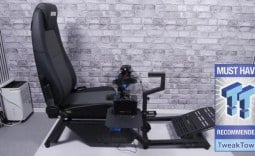
 Next Level Racing Flight Simulator MSFS Edition Review
 These powercfg commands explain why your PC wakes at night or won't sleep
 Thrustmaster HOTAS WARTHOG MKII Review
 Snipping Tool handles most of my screenshots, but this open-source app still does the jobs it can't
 Razer Huntsman V3 HE Magnetic Mini 65% 8KHz Keyboard Review - For Competitive Gamers
 Pulsar Feinmann F01 Noctua Edition Gaming Mouse Review - No Sweat
Learn about how TweakTown tests and reviews hardware. As an Amazon Associate, we earn from qualifying purchases. TweakTown may also earn commissions from other affiliate partners at no extra cost to you.
Stay Updated
Follow TweakTown for breaking tech news, reviews, and daily updates.



Silent Hill's secret to staying fresh is a 'lore bible' that developers are not allowed to read
If you have been following the latest in Konami's Silent Hill franchise, it's hard to miss how recent entries feel distinctly different from the spooky Americana of the original series we are all familiar with.

Silent Hill f, for example, moves the series to 1960s Japan, while Silent Hill Townfall relocates the action to 1990s Scotland and uses a first-person perspective. Turns out this creative independence is entirely by design, with Konami actively pushing for studios to try something new with Silent Hill, and it has a pretty clever way of achieving that goal.
In an interview with Radio Times Gaming, Silent Hill series producer Motoi Okamoto said Konami maintains an internal bible defining what constitutes Silent Hill as a franchise. The interesting part is what Konami does with it.
A jailbroken PS5 can now run original Xbox games
A jailbroken PS5 is quickly turning into an unlikely retro gaming machine, with developers now getting original Xbox games running on Sony's console while separate projects target Xbox 360 and Windows games. We have been closely covering the recent PS5 modding scene.

The most advanced effort so far is XPSemu, a native PS5 port of the open-source xemu original Xbox emulator. Its Alpha 1 release can already boot several Xbox titles and offers features including per-game settings, game patches, performance monitoring, and internal resolution scaling of up to 4x. However, compatibility and performance remain works in progress.
Current developer testing highlights just how demanding emulation can be. Halo 2 reportedly runs at around 30 FPS without a patch and 36 - 50 FPS with a 60-FPS patch, while Forza Motorsport reaches roughly 15 - 21 FPS during races. Fable: The Lost Chapters reportedly runs at 22 - 30 FPS, though heavier scenes can drop to 10 - 20 FPS.
Continue reading: A jailbroken PS5 can now run original Xbox games (full post)
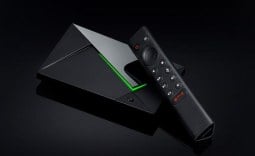
NVIDIA raises SHIELD TV Pro price by 50% to $299.99
NVIDIA has bumped the price of its 2019 SHIELD TV Pro media streamer by 50%, now retailing for $299.99, up from its launch MSRP of $199.

The SHIELD TV Pro launched at $199.99 in October 2019, powered by NVIDIA's Tegra X1+ processor with 3GB of RAM and 16GB of storage. The current model still uses the same core hardware while retaining features such as Dolby Vision, Dolby Atmos, AI-enhanced upscaling, GeForce NOW, and Plex Media Server support.
NVIDIA's own online store now lists the device for $299.99, confirming the new price.
Continue reading: NVIDIA raises SHIELD TV Pro price by 50% to $299.99 (full post)
Redditor buys a used Ryzen 7 5800X3D, gets locked out of Valorant because previous owner cheated
A Redditor in Germany says their second-hand Ryzen 7 5800X3D came with someone else's Valorant ban attached. Posting on r/PCBaumeister, user After-Cartoonist-196 explains that they picked up the processor on the classifieds site Kleinanzeigen and took ownership on September 21. The chip ran without any issues until they opened Valorant, which booted them straight out. The game had worked fine on their old CPU.

They contacted Riot support and were apparently told that the processor had been on Vanguard's blacklist since August 12, the result of a hardware ban handed to the previous owner for cheating. According to the post, the motherboard and storage drive in the buyer's PC were flagged too, and Riot support wouldn't remove the restriction manually.
Riot's anti-cheat boss Phillip Koskinas later weighed in on X, and his version is a little different:
GTA 6 leak claims explode as multiple 'CyberLeek full build' downloads appear online
Claims that a complete playable build of Grand Theft Auto 6 has leaked online are going viral again, months after the first fake CyberLeek downloads began circulating.

A TikTok claiming the "GTA 6 ENTIRE GAME WAS LEAKED" has amassed more than 306,000 likes, 44,000 shares, 36,000 saves and 5,600 comments. The video points viewers toward a supposed Grand Theft Auto VI CYBERLEEK-build.v1.0.245.ISO listing, which claims to contain the complete game.
That listing says the build was added on August 26, 2026, weighs 130GB, and currently displays 1,337 seeders and 42 leechers. However, those figures are presented by the website itself and cannot be independently verified. Its file list also shows GTAVI_INSTALLER.exe at 0 bytes.
AOC pushes gaming monitors past 1,000Hz with new AGON PRO display created for serious gamers
AOC has announced an esports gaming monitor that pushes refresh rates beyond 1,000Hz, with its upcoming AGON PRO AGP257FT reaching an overclocked 1,050Hz at Full HD resolution.

The AGP257FT features a 24.5-inch oxide-based Fast IPS panel running at a 1920 x 1080p resolution. Its native refresh rate is already an extraordinary 1,000Hz, while overclocking adds another 50Hz without requiring a reduction in resolution. AOC describes it as the fastest monitor in its lineup, and how it's specifically designed for gamers who only really care about impeccable motion performance through having the highest possible in-game framerate.
At 1,000Hz, the display has a refresh interval of just one millisecond, and when increasing that to 1,050Hz it brings the interval down to approximately 0.95ms, illustrating just how small the timing differences become at these speeds. Taking full advantage of that refresh rate also requires a PC and game capable of delivering similarly high frame rates, meaning potential buyers should check if their most played titles can even reach 1000FPS before purchasing.
California sends cease-and-desist over human-versus-Terminator cage fight
A humanoid robot cage fight featuring a human as an opponent has attracted more than just online attention, with its organizer saying California regulators have caught wind of the event and have now issued a cease-and-desist notice.

The notice, dated September 23 and shared publicly by REK founder Cix Liv, identifies the September 18 exhibition. It orders the organizers to stop holding, promoting, or advertising boxing or mixed martial arts events involving humans in California without the commission's prior approval and the required licensing. For those who missed the event, the exhibition mentioned by the regulators featured influencer Frankie LaPenna, who was up against a humanoid robot. Footage of the event shows the machine throwing kicks at its human opponent, with marketing claiming this was the first human-versus-robot cage fight.
Notably, the robot was remotely operated by a human, meaning the footage doesn't show an autonomous machine deciding how to fight in real time against a human. Some other publications report the entire event was a staged performance, meaning onlookers shouldn't treat the event as evidence of a robot defeating a human in a fight.
Some Switch 2 cartridges now require a software update before players can launch them offline
A Nintendo Switch 2 user reports that their physical copy of Donkey Kong Bananza will not launch without a software update, but a follow-up offers a possible explanation for the requirement.

The complaint was shared by X account Pirat_Nation alongside a photograph showing the message: "A software update is required. Update data will be downloaded now." The prompt displays Cancel and Download options, without a visible option to start the game.
Pirat_Nation subsequently attributed an explanation to preservation group DoesItPlay: the console may remember a newer version of a game that was previously installed and require at least that version before allowing play. Under those circumstances, inserting a cartridge containing an older build could trigger an update requirement.
RTX 5090 and RTX 4090 GPUs named in alleged $300 million NVIDIA smuggling scheme
A California technology company owner has been arrested on federal charges accusing him of being involved in smuggling more than $300 million worth of servers containing NVIDIA GPUs to China, which is a violation of the strict US export rules around powerful AI-capable GPUs.

Greg Lui, 38, also known as Yiu Kong Lui, owns Earthmade Computer Inc., based in City of Industry, California. The US Department of Justice announced his arrest on October 1 following a three-count indictment, and provided details via an official press release by the Office of Public Affairs.
Prosecutors allege Lui and his co-conspirators purchased restricted servers from American manufacturers using paperwork that falsely identified permissible overseas customers as the final recipients. The equipment was allegedly shipped through Malaysia and Singapore before being redirected to China without the required US export licenses.
Official GTA 6 age rating reveals players can snort cocaine directly off their hand at any time
A reported PEGI rating description for Grand Theft Auto 6 has revealed a list of unusual gameplay details, and one of the most interesting details is players have the ability to carry cocaine and snort it directly from their character's hand.

The description surfaced on October 2, with RockstarINTEL, ComicBook, and GamesRadar publishing coverage of its contents. However, RockstarINTEL subsequently updated its report to say PEGI had removed the page, leaving the detailed listing unavailable for direct verification, as currently searching for GTA 6 on the PEGI rating board yields no results. However, before the listing was removed the description was captured and has been passed around on social media platforms.
According to the circulated description, drug use is frequent and prominent, with players able to consume illegal substances from their inventory or alongside other characters. Cocaine is specifically identified as something players can carry and use at any time, with it going as far as stating players have the ability to snort cocaine directly off their character's hand. Unfortunately, the description does not explain whether consuming it changes movement, combat, or other gameplay systems, but it's assumed it will.
RAM shortages to last through 2028, Samsung and Micron reiterate
Memory-makers tell investors that current RAM market conditions will continue through at least 2028 as most of their stock is already allocated.

RAM shortages are expected to last through 2028, Samsung and Micron executives have reiterated. Micron CEO Sanjay Mehrotra tells investors in a Q4'26 earnings call that the "supply-demand environment is only getting tighter."
These trends could ensure that the next-gen PlayStation 6 and Project Helix Xbox device family are more expensive than they otherwise would have been without these market disruptions.
Continue reading: RAM shortages to last through 2028, Samsung and Micron reiterate (full post)
RTX 5090 owner adds two 8-pin connectors to GPU with daughterboard mod dropping cable temps below 40C
An RTX 5090 owner has gone to great lengths to prevent any potential melting issues on their RTX 5090 graphics card by modifying the card with a daughterboard that puts the load of the 16-pin connector onto two additional 8-pin connectors on the board. Redditor DallasGrave published their mod on the PCMR subreddit, noting that temperatures on the wires of the 16-pin connector had improved significantly thanks to the mod and never broke 40C.

The mod consists of a single daughterboard with two 8-pin PCIe connectors attached to the backplate of the RTX 5090. To get these connectors to power the card, the bottom contacts of the 12V-2x6 connector are soldered to a pickup PCB that transfers power to the daughterboard. With this design, the power of the 16-pin connector is spread between itself and the two 8-pin PCIe connectors, essentially giving the card two extra 8-pin connectors to spread the load. The modder noted that with this setup, the power draw across all the wires and conductors was only around three amps, and at 550W full load for 48 hours, the wires never crossed the 40C mark.
This is a massive improvement compared to the operating temperature of some RTX 5090 graphics cards that have had their connectors melted. One of the worst cases involved Hardware Unboxed's ROG RTX 5090 Astral that melted, where the connector on their card reached a blisteringly hot 175C. The 8-pin mod is so good in the thermal department that it also operates below the operating temperature of normal 12V2x6 power connectors. The average operating temperature of the 12V-2x6 power connector is usually above the 40C range, with the connector's advertised temperature limit being 105C.
GTA 6 will hopefully normalize $80 and $100 games, says Kingdom Come developer
Warhorse Studios' co-founder hopes that GTA 6 helps normalize higher-priced games so that the industry can possibly get some relief.

The video games industry is caught in a diabolical Catch-22 situation. In actuality, it's been facing this problem for quite some time. The simple fact is that games cost too much to make now, and there's no guarantee you'll make your money back. That's a hard truth for the entertainment industry in general, but one that especially stings for a market whose product represents the conjunction of all of the arts in one.
Companies have tried to get around this by holding off on pricing, splitting content out of mainline purchases and selling it back via season passes, DLC, and even microtransactions. That's worked, and helped the industry grow in profit and scale. But those tricks aren't novel any more, and the market is becoming saturated. In 2020, at the start of Gen9, Sony banded together with Activision, Take-Two, and Electronic Arts to introduce $70 games. Hiking the baseline price of Gen9 software also helped earn profits through disruptions like COVID-19.
Steam made an estimated $1.7 billion in September, an all-time new record
Gamers spent $1.7 billion on Steam games and content last month, making it the best September on record, per the latest estimates from Alinea Analytics.

Steam just made record earnings for a September month. New estimates from analyst firm Alinea Analytics show that Steam may have delivered a new all-time high of $1.7 billion in Sept. '26. This represents a mighty 13% increase from last year, and the performance was driven by a healthy mix of paid software and free-to-play content spending.
Around 500 games had the top-grossing spots on the platform, of which new IP released in 2026 made up over 20% of earnings. This is a substantial amount that's no-doubt in part driven by the bevy of breakout Steam hits like Windrose, Meccha Chameleon, Blood of Dawnwalker, Pragmata, How to Fish, and Slay the Spider 2, all of which sold over 1 million copies in a matter of days.
Sony quietly revises PS5 Slim with better liquid-metal cooling and easier-to-replace CMOS battery
Sony has quietly released a new internal hardware revision for the PlayStation 5 Slim. Console technician @Modyficator89 on X posted a teardown of the Marvel's Wolverine Limited Edition Bundle, and the findings are interesting, to say the least. The update introduces a new "EDM-051" motherboard layout, redesigned to be simpler and easier to repair.

However, the most technical changes we see here focus directly on component and cooling efficiency. The new PS5 Slim appears to borrow a page from the PS5 Pro's book, as Sony has updated the liquid-metal cooling setup around the main APU die.
In short, the protective barrier exposes less surface area to the liquid metal, so it is better contained, reduces the chance of leaks, and keeps cooling closer to the processor. The new heatsink also uses a different construction and material than older versions.
Micro Center starts asking RTX 5090 buyers for ID and a 'No Export' declaration
Micro Center appears to be tightening its sales process for the GeForce RTX 5090, with some buyers reportedly required to present government-issued identification and sign a declaration confirming that the graphics card will not be exported from the United States.

The requirement surfaced publicly when a customer at Micro Center's Tustin, California, store said they were required to complete an "Advanced Computing Product Purchaser Declaration" when purchasing a PowerSpec AI90 workstation equipped with an RTX 5090. According to the buyer, the requirement had been introduced only a few days earlier.
The form reportedly collects the purchaser's legal name, address, identification details, contact information, intended end user, installation location, and intended use.
AMD Ryzen 9 5900X3D engineering sample surfaces with a single 3D V-Cache stack and 128MB of L3 cache
AMD first teased 3D V-Cache in 2021 on a 12-core Ryzen 9 5900X prototype, yet the only Zen 3 X3D chips it went on to sell topped out at eight cores. Now a Chiphell user has apparently got hold of one of the 12-core parts that never made it to shelves, and it isn't the version we already knew about.

The chip is an engineering sample of the Ryzen 9 5900X3D, marked with the code 100-000000652. Screenshots show 12 cores, 24 threads, a 105W TDP, and 128MB of L3 cache. That total comes from 96MB on one CCD and the stock 32MB on the other, so it looks like AMD stacked the extra 64MB of cache on just a single chiplet.
The 5900X3D prototype that AMD showed Gamers Nexus back in 2023 had a stack on both CCDs, which added up to 192MB. The difference is notable, but the clock speeds are the more interesting part.
The RTX 5070 is now the most popular GPU on Steam, despite inflated prices
It goes without saying that the current state of PC gaming hardware is less than ideal. Due to the ongoing memory shortage, GPU, SSD, and RAM pricing is all over the place. A quick search on PCPartPicker shows that the average price of an RTX 5070 is around $850, with many models near the $1,000 mark, despite an MSRP of $550.

So, it is a surprise to see the mid-range RTX 5070 currently hold the top spot in Steam's September Hardware Survey, with a market share of 5.86% of surveyed systems, up from 3.56% in August.
Usually, we'd see NVIDIA's RTX 60-class cards at the top of these hardware survey charts. In fact, for a long time, the RTX 3060 had cemented its position as the most popular choice among gamers. The RTX 5070's position is different from this usual cadence.
Ex-EVGA overclocker KINGPIN announces PC overclocking return with a new YouTube channel
Famous overclocker Vince Lucido, known for his custom-made KINGPIN edition EVGA graphics cards, is coming back to overclocking after taking a three-year hiatus from the industry, starting when EVGA cut ties with NVIDIA and stopped making graphics cards. In a recent video, Lucido announced his official introduction back into the overclocking space with a new YouTube overclocking channel called Overclocking Kingpin.

Lucidio explained that he is only now coming back to the overclocking scene after being released from contractual obligations (likely from EVGA). Lucidio also revealed that ASUS was the one to bring him back to the overclocking scene, noting that without their constant persistence, he likely would have never gotten back into overclocking.
KINGPIN is one of the most renowned overclockers in the PC industry, known for his record-breaking overclocks, especially in the early 2000s with liquid nitrogen cooling. EVGA began employing Lucido around this time, which eventually led to EVGA making flagship GeForce graphics cards based on his handle. The last KINGPIN graphics card that was officially produced was the RTX 3090 Ti KINGPIN Hybrid.
Xbox CEO laughs when asked to apologize to Sony over Hideo Kojima's Physint
Xbox CEO Asha Sharma laughed at the suggestion that she should apologize to Sony after Microsoft picked up publishing duties for Hideo Kojima's upcoming action-espionage game, Physint.

The exchange appears in a New York Times interview with Sharma, and was quoted by Pure Xbox who reproduced the passage describing Sharma's reaction. According to the report, she laughed, shrugged, and said she was happy Kojima had chosen to work with Xbox. The publishing switch follows Sony's decision to step away from Kojima's upcoming project called Physint. Kojima previously said his studio received an unexpected cancellation notice in June, prompting a search for a new partner before Xbox stepped in.
In the weeks that followed Microsoft formally announced the partnership with Kojima on September 9, which marks the second Xbox project Kojima is producing under the Xbox label, with the second being OD. However, the deal between Xbox and Kojima isn't just on games, as it also includes separate collaboration on film and television projects. Those projects have yet to be detailed or announced. As for Sharma, despite the obvious competitive nature between Xbox and PlayStation, Sharma said Xbox's relationship with Sony would continue as, "Competition and collaboration can coexist," she said.