


Storage
Get the latest storage news, covering new solid-state drives (SSDs), hard disk drives (HDDs), flash storage, performance benchmarks & more.
Stay Updated
Follow TweakTown for breaking tech news, reviews, and daily updates.


As an Amazon Associate, we earn from qualifying purchases. TweakTown may also earn commissions from other affiliate partners at no extra cost to you.
Biwin's new PCIe Gen5 SSD delivers next-gen speeds to everyone while only drawing 4.5W
With the current memory and storage crisis driving consumer hardware prices to skyrocket, the idea of picking up a fast PCIe Gen5 SSD in 2026 feels like you're at an open market, competing with an AI company for an extra Terabyte or two.

The good news is that there are still companies out there, like Biwin, that are developing storage solutions with everyday users, gamers, and creators in mind. At Computex 2026, we got to see the new Biwin M560 PCIe 5.0 SSD, and were immediately impressed with its design, specs, and potential.
Firstly, it features a DRAMless design, which makes it a more affordable SSD. It also leverages the latest BiCS FLASH generation 8 technology to deliver highly efficient storage capacities of 1TB and 2TB. This means it can deliver Sequential Read speeds of up to 11,000 MB/s (11 GB/s) and Sequential Write speeds of up to 10,000 MB/s (10 GB/s), while drawing only 4.5W of power. So there's no need for active cooling, which makes it a highly versatile option for a wide range of systems.
Biwin's new BL130 Mini SSD unlocks a new era of storage for gaming handhelds
Portable, handheld gaming is growing in popularity. From Valve's Steam Deck to the ROG Xbox Ally X to new hardware on the horizon powered by Intel's impressive new Arc G3 Extreme processor, like the Acer Predator Atlas 8 and MSI Claw 8 EX AI+. Naturally, when it comes to PC gaming, expandable storage is important, but so is speed. At Computex 2026, we got to see an innovative and impressive handheld gaming storage solution from Biwin in the form of its new, tiny BL130.

It's a single-chip SSD designed specifically for gaming handhelds, about the size of an SD Card, and delivering exponentially faster performance. Measuring 15 x 17 x 1.4 mm, the Biwin BL130 is an impressive bit of SSD engineering, as the company has managed to pack the controller and the NAND flash onto a single chip or package. What makes it even more interesting is that it uses a PCIe Gen5 x2 interface, which delivers full Gen3-like speeds in a compact form factor.
And with that, you've got Sequential Read speeds of up to 3,700 MB/s or 3.7 GB/s and Sequential Write speeds of 3,400 MB/s or 3.4 GB/s. As impressive as those numbers are for such a tiny little SSD, it's the all-important Random Read and Random Write performance that makes it the ideal storage expansion solution for gaming handhelds.
ADATA turns your smartphone into the key for its Urban Tapsafe external SSD
With content creators moving to higher-resolution video shooting, such as ProRes on the latest iPhone generation or the equivalent on the Android side, on-device storage is quickly being eaten up.

ADATA has provided a solution to this problem, with layers of security for creators concerned about losing their storage device and having its contents stolen. At Computex 2026, ADATA unveiled the Urban TapSafe, a new creator-focused external SSD featuring NFC-based security.
ADATA explained to me that the drive uses USB 3.2 Gen2 x2 (20 Gbps) and will be available in 1TB and 2TB capacities. Additionally, the drive weighs only 72.61g (2.56oz), making it extremely easy to carry in a camera bag or even a pocket.
Phison's PCIe Gen6 SSD controller is here, delivering incredible 28 GB/s speeds
Although PCIe Gen5 SSDs still feel like they're coming into their own, at Phison's Computex 2026 booth, we were given a friendly reminder that PCIe Gen6 was right around the corner. The company's in-house developed PCIe Gen6 controller, the X3, is built for enterprise first (naturally), but it's set to deliver a 2X performance increase over PCIe Gen5.

And that covers all of the most important specs. Sequential read and write speeds for the Phison X3 reach an incredible 28 GB/s, which is double the 14 GB/s speed of Gen5 SSDs and controllers. Not only that, but Random Read and Random Write (IOPS) both hit 6,800K, which is again, double what Gen5 delivers.
And this even extends to power efficiency, which Phison measures in MB/s per watt. Here the PCIe Gen6 X3 delivers 4,000 MB/s per watt compared to Gen5's 2,000 MB/s. Again, that's double. For the data center and AI factory markets, a 2X increase is a game-changer, with Phison noting that X3-powered SSDs will be available in capacities up to 2PB. That's 2 Petabytes. Yeah, remarkable.
Phison's E37T maxes out Gen5 SSD speeds without DRAM, and it was made for consumers
Anyone who has been looking at consumer memory and storage prices recently would understand why so many people are looking backward instead of forward when it comes to affordable storage. This is why Phison's E37T controller feels like an oasis in a desert of AI and data center products. Even setting aside the current market reality, it's a game-changer.

The Phison E37T controller is an engineering feat worth celebrating, as it powers the first DRAMless SSDs capable of fully maxing out their PCIe Gen5 interfaces, delivering speeds over 14.9 GB/s. And the E37T does so while drawing less than 5W of power. Throw in impressive random read and write speeds, and it's a Gen5 SSD controller that truly makes Gen5 feel like it lives up to its promise. No need for additional cooling or expensive DRAM.
At Computex 2026, we spoke with Phison's Chris Ramseyer, who told us this controller was designed with consumers in mind. Not only that, but he and his team at Phison saw where the industry was headed years ago and knew that, with the DRAM trend shifting toward data center and enterprise first, they needed to come up with something for everyone else. For gamers, enthusiasts, and everyday PC users.
KIOXIA at Dell Technologies World 2026, breakthrough storage solutions for AI and enterprise
Dell Technologies World 2026 kicks off next week, once again taking place at The Venetian Resort in Las Vegas from May 18 through May 21. As a Diamond-level sponsor of the event and a longtime partner with Dell, KIOXIA will be on hand to showcase its latest innovations and cutting-edge flash storage solutions and technologies for AI and enterprise.

With the theme of Dell Technologies World 2026 being "Shaping the Future of Business, Together," KIOXIA will showcase exactly that, focusing on performance and scalability in today's data centers and AI-powered environments. This includes leveraging PCIe 5.0 to increase responsiveness and storage capacity, while showcasing its full SSD portfolio across a wide range of Dell platforms, from client-facing devices to servers and storage systems.
Some of the highlights include KIOXIA's PCIe 5.0 LC9 Series 245.76 TB E3.L enterprise NVMe SSDs in a Dell PowerEdge server in an industry-first 9.8 Petabyte (PB) setup, and KIOXIA's CM7 Series enterprise SSDs that meet the stringent and specific government FIPS 140-3 Level 2 Validation standard running on Dell PowerFlex and Nutanix Cloud Platforms. Plus, KIOXIA will showcase its new line-up of client SSDs for OEMs, including the EG7, XG10, and BG8 Series.
Dell and KIOXIA unveil an impressive 9.8 Petabyte high-density 2U server
What happens when you pair the Dell PowerEdge R7725xd Server with 40 KIOXIA LC9 Series 245.76 TB SSDs? Well, you get something unprecedented and impressive: a 2U server for enterprise and data centers with 9.8 Petabytes (PB) of flash storage. And to highlight just how much storage capacity that is, 9.8 PB is equivalent to 9,800 terabytes (TB) or 9,800,000 Gigabytes (GB).

This setup is impressive not only in its storage capacity but also in the flash technology it employs. KIOXIA's LC9 Series delivers PCIe Gen5 speeds of up to 12,000 MB/s paired with the company's 8th Gen BiCS FLASH with CBA (CMOS directly Bonded to Array) technology, which leads to 32 2-Terabit (Tb) dies stacked together to offer the groundbreaking 245.76 TB capacity on a single 2.5-inch Enterprise and Datacenter Standard Form Factor (EDSFF) SSD.
In addition to the impressive SSD setup, this Dell PowerEdge R7725xd server also sports a high-end AMD EPYC processor to meet the demands of large-scale "data lakes," AI, and intensive enterprise workloads. And when it comes to AI, these air-cooled servers complement GPU-heavy systems with up to 5 x 400Gbps NICs for high-capacity, power-efficient model training and AI data management.
KIOXIA announces new XG10 Series PCIe Gen5 SSDs for OEMs and consumers
One of the biggest stories for the consumer-facing PC market, that is, the non-data center and AI-only space, was Micron announcing that it would no longer produce consumer SSD and RAM products under its long-standing Crucial brand. It was a surprising move, but on the plus side, it looks like KIOXIA, the inventors of flash memory, is stepping in to fill that void with a new range of SSD offerings built for OEMs and the consumer PC market.

In addition to the affordable EG7 and BG8 Series of SSDs that cover PCIe Gen4 and Gen5 interfaces and leverage the company's groundbreaking BiCS FLASH 3D flash memory with its CBA (CMOS directly Bonded to Array) technology, KIOXIA is also introducing the new XG10 Series of SSDs for PC OEMs, targeting high-performance users.
With its PCIe 5.0 interface delivering sequential read speeds of up to 14,000 MB/s and sequential write speeds of up to 12,000 MB/s, the XG10 Series is built for content creation workloads such as editing, immersive next-gen cinematic gaming, and local AI training and inference. Compared to the previous generation's XG8 Series, that's double the performance while also delivering improvements of 122% in random read and 158% in random write.
Continue reading: KIOXIA announces new XG10 Series PCIe Gen5 SSDs for OEMs and consumers (full post)
HDD and SSD shortages have now led customers to sign 5-year supply agreements
With the current AI and data center boom, which is dramatically increasing demand for storage solutions spanning SSDs and traditional HDDs, the biggest players in the space are now signing long-term supply agreements with customers that span up to five years.

Per Sandisk's latest earnings call with investors (via Tom's Hardware), Luis Visoso, the company's chief financial officer, confirmed that one of its longest-standing customer contracts is for 5 years. Apparently, this includes quarterly commitments and a combination of fixed and variable pricing "tailored to meet the needs" of its customers.
Other storage players in the HDD space, which include Seagate and Western Digital, are also making multi-year deals with customers. According to the latest information, Seagate's long-term supply agreements now include 2028, while Western Digital's have been extended through calendar year 2029.
Kingston launches next-gen 30.72TB Gen5 SSDs for data centers
The Kingston DC3000ME Gen5 U.2 NVMe SSD is now available in a 30.72 TB capacity, boosting storage density and performance for data centers. With its PCIe 5.0 NVMe interface, this new 30.72 TB model delivers sequential read speeds of up to 14 GB/s and random read performance of up to 2.8 million IOPS. It's also fully backward-compatible with PCIe 4.0, so it's next-gen-ready for data centers planning to upgrade sometime down the road.

Under the hood, the Kingston DC3000ME uses 3D eTLC NAND technology with on-board power-loss protection (PLP) to safeguard data in the event of a power outage. Security-wise, the Kingston DC3000ME supports AES 256-bit encryption and TCG Opal 2.0 self-encrypting drive (SED) capabilities. Plus, it's backed by a 5-year limited warranty for additional peace of mind.
In the current data center era of AI workloads, training, and inference, SSD speed, reliability, and capacity are becoming a top priority for new setups, upgrades, and future-proofing. The benefits of PCIe 5.0 speeds are a game-changer for Retrieval-Augmented Generation (RAG) systems running Large Language Models (LLM), as SSD storage is used to augment the cost-prohibitive capacity limitations of DRAM.
Continue reading: Kingston launches next-gen 30.72TB Gen5 SSDs for data centers (full post)
KIOXIA introduces new mainstream PCIe Gen5 BG8 Series SSDs for PC OEMs
The current DRAM and flash memory crisis, which has seen massive price increases and shortages of consumer-facing products like DDR5 memory and SSDs, has been ongoing for months. It's all thanks to the current AI boom and hardware makers trying to keep up with the demand from data centers.

Now, this isn't another "everything's bad" story, but rather a follow-up to KIOXIA's recent announcement that it was launching a new affordable, value-focused series of SSDs for PC OEMs. Today, KIOXIA is expanding its consumer, client, and PC OEM lineup with the high-performance KIOXIA BG8 Series of SSDs, poised to deliver "PCIe 5.0 speed to the mainstream segment," and it's arriving at the perfect time.
KIOXIA is not only a leader in flash memory technology but also its inventor. The DRAM-less KIOXIA BG8 Series incorporates the company's impressive 8th-generation BiCS FLASH 3D flash memory with its innovative CBA (CMOS directly Bonded to Array) technology, delivering a 47% improvement in sequential read speeds and a 67% improvement in sequential write speeds. With read and write speeds of up to 10,300 MB/s and 10,000 MB/s, the new KIOXIA BG8 Series is poised to deliver Gen5 performance to the mainstream PC market.
Continue reading: KIOXIA introduces new mainstream PCIe Gen5 BG8 Series SSDs for PC OEMs (full post)
KIOXIA fires back at rising SSD costs with new EG7 Series for PC OEMs
The current DRAM and flash memory crisis has seen the cost of everyday PC hardware steadily rise in recent months, with the biggest pain points in memory and storage. If you've been tracking the prices of high-capacity DDR5 memory modules and SSDs, you're probably aware that building a new PC or upgrading an existing rig is slowly becoming prohibitively expensive.

And although it feels like regular consumers are being left behind in favor of AI infrastructure and the data center market, there is some good news. Specifically, KIOXIA's new "value-oriented" EG7 Series SSDs, which the company says it created to deliver an affordable solution for PC OEMs and PC makers.
These DRAM-less QLC-based SSDs adopt KIOXIA's impressive 8th-generation BiCS FLASH technology to deliver performance on par with more expensive storage options while improving power efficiency. These new SSDs are set to be offered in the M.2 2230, 2242, and 2280 form factors, with 512GB, 1TB, and 2TB variants. Performance-wise, you're looking at PCIe Gen4 levels, with sequential read speeds of up to 7,000 MB/s and sequential write speeds of up to 6,200 MB/s.
Continue reading: KIOXIA fires back at rising SSD costs with new EG7 Series for PC OEMs (full post)
PC gamers will reportedly cut system RAM before choosing a 512GB SSD
During a recent event with Lexar, a brand known for creating DRAM, SSDs, and memory cards, the company told Digital Foundry an interesting statistic about the current memory crisis and PC gamers. As we've been reporting for a while now, the AI-boom's insatiable appetite for all things memory and storage has led to an unprecedented situation in the consumer technology space. Basically, RAM and SSD prices have exponentially increased.

What this means for gamers looking to build their first gaming PC or upgrade is that they're essentially forced to opt for lower-capacity memory and storage options to keep overall costs from spiraling out of control. Case in point: just the other day, we reported that a 128GB DDR5 kit reached $4,200, whereas the same memory in a 32GB capacity costs $399.99. Still, that $400 price is much higher than it used to be, but it's the sort of "lesser of two evils" choice gamers and enthusiasts are having to make in today's climate.
And with that, Lexar told Digital Foundry that, when it comes to this sort of compromise, PC builders and gamers are more willing to choose smaller-capacity RAM or memory kits than smaller-capacity SSDs.
Continue reading: PC gamers will reportedly cut system RAM before choosing a 512GB SSD (full post)
Sony suspends almost all SD card sales due to global memory shortage
It seems like every day we see a new product falling victim to the crippling memory shortage that is currently ongoing. First, desktop RAM went extinct; then CPUs from both Intel and AMD went up in price. Graphics cards have long been difficult to hunt down, and even storage drives are slowly but surely going up in price. Sony has now announced that the global memory shortage has gotten to the point that it is no longer taking orders for its SD cards.

The move comes right off the back of Sony increasing the price of its PS5 consoles. The new direction means Sony will no longer accept orders for almost all SD card models, including CFExpress cards. There are some low-end cards still in production, but I wouldn't bet on finding a brand-new Sony SD card on market shelves any time soon.
Continue reading: Sony suspends almost all SD card sales due to global memory shortage (full post)
A new Samsung PCIe 5.0 QLC SSD is in the works with a custom RISC-V controller
Samsung has just announced its next-generation solid-state drive for AI applications, the BM9K1. Unveiled at the China Flash Market Summit 2026, this drive is a high-performance, efficient PCIe Gen 5 SSD that uses QLC NAND flash at a relatively cost-effective price. Samsung is targeting the "personal AI" segment with this SSD, which serves as a bridge between consumer devices and large-scale AI applications.

Perhaps the most interesting part of this SSD is its new proprietary Samsung controller, based on the open-source RISC-V instruction set. This new controller replaces the ARM-based controller that Samsung currently uses, and enables them to optimize the drive's energy efficiency and get the most out of QLC NAND flash for AI workloads.
Samsung claims a 23% improvement in efficiency over the previous BM9C1 model, an impressive figure that will have to be tested when the drive eventually comes out. However, the improved efficiency will be crucial for small-form-factor PCs and laptops that don't have much thermal headroom.
Samsung 870 Evo SATA SSD arrives out of nowhere in new 8TB capacity - but the price tag is predictably wallet-worrying
Samsung has a new 8TB model of its 870 Evo SATA SSD, although it's been stealthily launched with no formal announcement.

Tom's Hardware noticed that ComputerBase spotted the release of the 8TB version of the Samsung 870 Evo in Europe, and this drive is now actually on sale at some retailers (with the model number MZ-77E8T0B/EU).
This 8TB model wasn't mentioned on the Samsung web page for the 870 Evo when the German tech site wrote about its findings, although it has now just been added. So, this is now official, even though Samsung hasn't declared it as such - and it looks like retailers jumped the gun in terms of offering the drive for sale early.
This nearly empty server has 1.23 Petabytes of storage
At NVIDIA GTC 2026, we got to see the future of AI, memory, and storage technology from all of the biggest players in the space. And while several hyperscale solutions conjure images of racks and servers as far as the eye can see, at KIOXIA's booth, we saw the opposite. And in many ways, for storage solutions, it was incredibly impressive.

In a 2U server chassis that normally stores 40 enterprise NVMe SSDs or up to 10 petabytes of capacity, KIOXIA was displaying an almost empty chassis with only five drives. The kicker is that it's a barebones-looking setup that offers 1.23 Petabytes of storage capacity. This is all thanks to KIOXIA's LC9 Series, which introduced the industry's first high-capacity 245.76 TB NVMe SSD for the data center market.
With five KIOXIA LC9 Series 245.76 TB Enterprise NVMe SSDs delivering impressive read throughput of 7,230 MB/s each, for a total of 36.2 GB/s, it's a clear look at just how far the industry has come in high-speed, high-capacity storage at scale.
Continue reading: This nearly empty server has 1.23 Petabytes of storage (full post)
Exascend's 16TB SSD is now on sale - but it'll set you back a mind-boggling $16,000
Want a 16TB SSD? If you do, then you'll be paying a lot of money for it, as while this capacity drive is now on sale in the US, the price tag runs to almost $16,000.

FanlessTech flagged up on X (via VideoCardz) that the Exascend Enterprise-Grade PE4 M.2 SSD is now available to buy at Amazon for the not inconsiderable sum of $15,935 at the time of writing. (Note that the image is wrong - the drive being sold is actually an M.2 model).
As the name makes clear, this is an enterprise drive and one that isn't being sold on the merits of its speed, but rather that 16TB capacity.
KIOXIA announces a brand-new type of SSD, and it's a game-changer for AI
At NVIDIA GTC 2026 this week, the annual all-things-AI event, KIOXIA announced it is developing a Super High IOPS SSD, which it described as a "new type of SSD" built for AI systems of today and the future. What makes it new is that it allows the GPU to access the SSD's high-speed flash memory as an extension of existing High Bandwidth Memory (HBM) in AI systems.

Essentially, with KIOXIA's new Super High IOPS SSD, AI systems will be able to dramatically increase the available memory capacity with the help of high-speed SSDs. Part of the KIOXIA GP Series, the company confirms that development is underway and that evaluation samples will be sent out to select customers by the end of the year.
DRAM capacity, or memory size, is one of the limiting factors and the highest costs in scaling large AI systems. And with that, this new SSD is KIOXIA's contribution to the NVIDIA Storage-Next initiative, which is about addressing this shift by incorporating additional solutions for data-intensive AI workloads constrained by DRAM capacity or HBM availability.
Silicon Motion new SM8008 PCIe Gen5 controller, 14GB/s speeds on less than 5W
Silicon Motion has announced the launch of its latest PCIe Gen5 x4 NVMe SSD controller, the SM8008. Designed and purpose-built for data center drives and enterprise storage, where NVMe SSDs are becoming the go-to option for the AI era, the SM8008 is all about delivering performance, power efficiency, and stability.

Built on TSMC's 6nm process technology, the SM8008 delivers up to 14 GB/s or 14,000 MB/sec with over 2.3 million random IOPS (4K) while maintaining a power draw of under 5W. NVMe 2.0a and OCP Hyperscale NVMe Boot SSD Specification Version 1.0 compliant, you've also got inline DDR4-3200 or LPDDR4-3200 to enhance power efficiency and affordability for large-scale deployments.
On that note, Silicon Motion says that SSDs with the SM8008 controller can operate continuously across thousands or even "millions" of servers. Although it's difficult to visualize what millions of SSDs in a data center would look like, the point is that with PCIe Gen5 speeds and power consumption of under 5W, this translates to "significant reductions in total data center power consumption."
 Europe's new Switch 2 model could drive up production costs even higher
 HAVN's BF 360 Flow case puts vertical GPU cooling front and center
 This Old School RuneScape-themed PC case and keyboard almost brought a tear to my eye
 Biwin's new PCIe Gen5 SSD delivers next-gen speeds to everyone while only drawing 4.5W
 Biwin's new BL130 Mini SSD unlocks a new era of storage for gaming handhelds
 GAMDIAS unveils gorgeous curved glass PC case with a built-in action figure display stage
 MSI's STRIKE ALLOY TMR is a premium keyboard that comes with an intuitive smart display
 HAVN brings its focus on performance and quality to its first XR power supplies
 After emptying a stranger's wallet, NVIDIA's Jensen Huang found the owner and paid him back with profit
 HAVN's HS 360 case is lighter, smaller, and enhances airflow to keep your GPU nice and cool
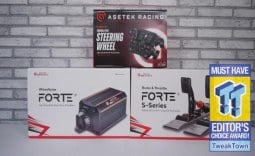 Asetek Forte S-Series Racing Simulator Bundle Review
 Razer Pro Type Ergo Wireless Split Ergonomic Keyboard Review - Built for Comfort and Support
 ASUS ROG Strix Morph 96 Wireless Gaming Keyboard Review - Great Performance, More Affordable
 SAPPHIRE Radeon RX 9070 GRE PULSE OC Review - A New 1440p Challenger Has Arrived
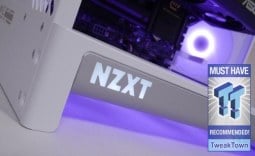 NZXT H6 RGB+ Compact Dual-Chamber Chassis Review
 ASRock Radeon RX 9070 GRE Steel Legend Review - The RDNA 4 Mid-Range Reshuffle
 ASRock Z890 Taichi Aqua Motherboard Review - Flagship features without the flagship price
 GIGABYTE Z890I AORUS Ultra Motherboard Review - Mini-ITX with surprisingly good thermals
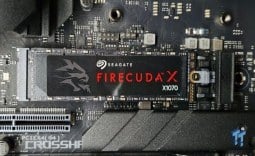 Seagate FireCuda X1070 4TB SSD Review - A New Mainstream Contender
 Lian Li HYDROSHIFT II 360P OLED Curved Liquid CPU Cooler Review
 Phison E37T SSD Controller Exclusive Preview - The Fastest DRAMless SSD Platform Yet
 USB Ports Not Working in Windows 11? Try These Fixes
 ASUS WiFi Routers and Networking Solutions Deliver Long-term Security and Reliability with No Additional Cost
 Second Monitor Not Detected in Windows 11? Try These Fixes
 Turn Your Old Smartphone Into a Dedicated Webcam for Your Windows PC
 The Send To menu is the right-click feature on Windows 11 that nobody bothers to customize
 Windows 11 will not let you pin a folder to the taskbar, but a 30-second workaround does
 ASUS ProArt Displays Unlock Creativity with Professional Monitors for Everyone
 What Happens If You Don't Activate Windows 11? 5 Downsides Explained
 Fast Internet on Your Phone but Slow on Your PC? Try These Fixes