



Seamus Blackley hasn't been a Microsoft employee for decades, but he was a key part of the core team that brought the first Xbox console to market, spearheading the movement and design of the original 'DirectX Box' that would compete with the likes of Sony and Nintendo. And with that context out of the way, in a recent interview with GamesBeat, Seamus Blackley shared his thoughts on the recent seismic shake-up over at Microsoft Gaming and Xbox.

With Microsoft Gaming CEO Phil Spencer and Xbox President Sarah Bond retiring, and newcomer Asha Sharma taking over with a history in AI, there has been a lot of speculation about what this could mean for Xbox's long-term future. However, communication from everyone has been on message, reassuring fans that Xbox isn't going anywhere and is committed to a future of games and new console hardware.
And with that, from Seamus Blackley's perspective, it's essentially the beginning of the end for Xbox at Microsoft. "Satya Nadella has made an incredible number of bets and invested an incredible amount of money and credibility in the transform model AI future," Blackley said. "Xbox, like a lot of businesses that aren't the core AI business, is being sunsetted."
"They don't say that, but that's what's happening," Blackley continues. "I expect that the new CEO, Asha Sharma, her job is going to be a palliative care doctor who slides Xbox gently into the night." It's pretty clear that Seamus Blackley believes that the future of Xbox is going to get swallowed whole by Microsoft's focus on AI.
"The natural consequence of the focus on AI is that AI abstracts every problem from the minds of the executives who believe in it," Blackley explains. "We're abstracting the problem of games as well. There's a core belief, and you can see it in what Satya said, that AI will subsume games like it will subsume everything. The job of all these people is to just gently usher all of these business units into the new world of AI. That's what you're seeing here. Whether or not you agree with it, whether you agree with AI having the potential to do that, whether AI will be successful, is a separate matter. But that's what we're seeing."
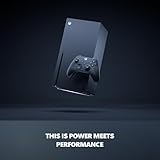



 Xbox's Matt Booty says there's 'no pressure from Microsoft' to force AI into games
 Battlefield 6 to be officially unveiled at the end of the month in 3-day event
 Star Citizen developer is now hiring for current, next-gen consoles, should be on PlayStation 6
 Nearly six million gamers teamed up to take down Marvel's latest supervillain
 Telegram CEO claims to have fathered more than 100 children, plans to 'open-source' his DNA
 Nexon will bring Overwatch to Korean PC gamers this year, still no word on rumored new StarCraft project
 Witcher 4 RTX Mega Geometry Foliage demo runs at almost 60 FPS on an RTX 4070 and 80 FPS at 4K on a RTX 5090
 Control Resonant was built by the biggest gameplay team in Remedy history, devs are buzzing over gravity-shifting traversal
 State of Decay 3 alpha playtest starts in May with 4-player co-op, new resource strategies, and 'tons of combat'
 Intel Core 9 273PQE 'Bartlett Lake' CPU seen successfully booted into Windows on a Z790 motherboard
 Starfield supports PSSR on PS5, targets 60FPS in performance mode, uses DualSense lightbar and haptics
 Take-Two lays off its head of AI and several team members just two months after the CEO said it was embracing Gen AI
 Sony buys machine learning firm behind volumetric 3D images to level-up PlayStation tech
 Last of Us Online live game was 80% done, says ex-Naughty Dog dev who worked on project for 7 years
 Microsoft Outlook doesn't launch in space, and on Earth, the email app takes more than 15 seconds just to get started
 Razer Viper V4 Pro Wireless Gaming Mouse Review - Built for Competition
 MSI MPG X870I Edge Ti Evo WiFi Motherboard Review - Packed and stacked Mini-ITX
 ASRock X870E Taichi OCF Motherboard Review - A memory OC monster
 Nitro Concepts S-Racer Compact Sim Racing Cockpit Review
 NuPhy Node 100 High Profile Wireless Keyboard Review - A Productivity Winner, for Windows and Mac
 Logitech G325 LIGHTSPEED Wireless Gaming Headset Review - A Lightweight, Affordable, Winner
 DapuStor Roealsen6 R6060 E1.L 245.76TB SSD Review - Massive Capacity with Fast Retrieval
 SAMA L70 360mm ARGB AIO Liquid CPU Cooler Review
 ASUSTOR Lockerstor 2 Gen2+ AS6702T v2 NAS Review - Fast Performance
 TERRAMASTER D1 SSD Pro Thunderbolt/USB Portable Enclosure Review - Incredible Potential
 Windows Laptop or Desktop PC: Which should you buy?
 Brightness not changing in Windows 11? Here's how to fix it
 Your SSD is telling you it's about to die - here's how to listen
 Windows 11 stuck on the loading screen with a spinning circle? Here's how to fix It
 I stopped guessing why my PC crashes after I started using this built-in Windows tool
 Unable to enter the BIOS/UEFI on your Windows laptop? Try these solutions
 Touchpad not working on your Windows 11 laptop? Here's how to fix it
 Six signs your Windows PC might be infected with malware
 How to see what's using up storage space on your C: Drive
 How to fix the "No Audio Device Is Installed" problem on Windows 11