



Intel's Bartlett Lake lineup is one of the more interesting CPU families to come out of Intel in recent years. The chips are not available on consumer platforms and are instead targeted at embedded and edge computing applications. What makes them stand out is their pure P-core design, with no E-cores in sight. The flagship of the lineup is the Core 9 273PQE, which packs 12 P-cores running at up to 5.9 GHz, 36MB of cache, and a 125W TDP, all based on the same Raptor Cove architecture found in Raptor Lake.

Since Bartlett Lake chips are not supported on consumer motherboards, enthusiasts have had to get creative. We previously covered how a modder successfully booted the Core 9 273PQE into Windows on a standard Z790 motherboard, an impressive feat given the platform's limitations. Shortly after, we also covered benchmarks from German reviewer Zed Up Gaming, which showed the 273PQE outpacing the Core i9-14900K by up to 10% in gaming. That was a genuinely exciting result for a chip that Intel never intended for consumer desktops.
Now, PC Games Hardware has published a much more thorough set of gaming benchmarks, and the results tell a very different story. Using a proper Bartlett Lake-compatible workstation board, the ASRock IMB-X1714 with a W680 chipset, and DDR5-5600 C46 memory, the 273PQE was tested across roughly 15 games. Across those tests, the chip failed to pull ahead of the Core i9-13900K, a processor that is now over four years old.

Looking at the actual numbers from PCGH, the 273PQE averaged around 64.8 FPS across the tested games, while the Core i9-13900K averaged approximately 69.9 FPS on the same platform, putting the older chip around 8% ahead. In the broader ranking, the chip lands somewhere between the Core i5-14600K and the Ryzen 7 7800X3D in gaming, which is not where you would expect a 12 P-core flagship to end up.
The gap between these results and the earlier Zed Up numbers likely comes down to the platform and memory situation. Running the chip on a consumer Z790 board with faster, better-tuned memory gives it a meaningful advantage that the native embedded platform cannot replicate, given the very restricted DDR5-5600 C46-qualified vendor list.
This also goes some way toward explaining why Intel chose not to bring Bartlett Lake to consumers in the first place. If 12 P-cores cannot consistently outperform an older 8 P-core consumer chip in gaming, the case for a mainstream launch becomes very hard to make.


 Intel's Bartlett Lake Core 9 273PQE spotted on PassMark, just 12% slower than Core i7-14700K
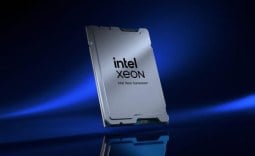 Intel lists the Xeon 6377P 'Bartlett Lake' CPU for enterprise use
 Intel's flagship Core 9 273PQE 'Bartlett Lake' is a P-Core-only CPU: 12 P-Cores, up to 5.9GHz
 Intel Core 9 273PQE 'Bartlett Lake' CPU seen benchmarked, up to 10% faster than the Core i9-14900K
 Intel Bartlett Lake-S desktop CPUs: LGA1700 socket, up to 8+6 Hybrid, up to 12 P-Core only CPUs
 Valve rolls out update for Steam Machine release following Steam Deck price hike
 PowerA puts Flight Simulator controls on its new Xbox controller, and it looks wild
 God of War Laufey release target leaks ahead of Sony's official announcement
 MSI Claw 8 EX AI+ with Intel's Arc G3 Extreme processor costs a lot more than expected
 Logitech's new G3 Series mouse and keyboard deliver its most affordable pro-level gear to date
 Xbox sets world record for shortest time between a AAA game reveal and its studio's closure
 Intel x86 processors with GeForce RTX graphics are reportedly coming in 2028
 AMD says FSR 4.1 on RDNA 3 will feature no quality loss
 US AI startup Tensordyne claims 3nm Napier chip outperforms NVIDIA Blackwell by 13x in tokens per second
 A sealed Super Mario Bros. cartridge from a 1986 NES bundle sells for $3 million at auction
 Speed Racer (2008) 4K Ultra HD Blu-ray Review: a stunning remaster of the cult classic
 MOAIPLAY ORA PRO G1 850W ATX 3.1 PSU Review: high efficiency and 10-year warranty for $119.99
 Navman MiVue Smart True 4K Surround Dashcam Review - Seeing In All Directions At Once
 IQUNIX Magi96 Pro Aluminum Low Profile Mechanical Keyboard Review - Premium Build, Satisfying Sound
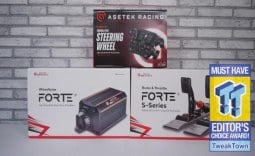 Asetek Forte S-Series Racing Simulator Bundle Review
 Razer Pro Type Ergo Wireless Split Ergonomic Keyboard Review - Built for Comfort and Support
 ASUS ROG Strix Morph 96 Wireless Gaming Keyboard Review - Great Performance, More Affordable
 SAPPHIRE Radeon RX 9070 GRE PULSE OC Review - A New 1440p Challenger Has Arrived
 NZXT H6 RGB+ Compact Dual-Chamber Chassis Review
 ASRock Radeon RX 9070 GRE Steel Legend Review - The RDNA 4 Mid-Range Reshuffle
 8 Critical Warning Signs You Should Never Ignore in Windows 11
 This Windows security feature protects Documents from ransomware, but it is off by default
 Windows 11 already has a voice typing tool, and it is the one most people are not using
 Quick Assist is the only remote-support tool I open when a relative calls about their PC
 The PowerToys utilities I keep enabled on every Windows 11 PC, and the ones I turned off within a week
 TweakTown's Best of Computex 2026 Awards - The Best Hardware, Gaming Gear, and AI
 Phison E37T SSD Controller Exclusive Preview - The Fastest DRAMless SSD Platform Yet
 USB Ports Not Working in Windows 11? Try These Fixes
 ASUS WiFi Routers and Networking Solutions Deliver Long-term Security and Reliability with No Additional Cost
 Second Monitor Not Detected in Windows 11? Try These Fixes