



Intel has officially introduced the Arc G-Series processor family, its first lineup of chips designed from the ground up specifically for gaming handheld PCs. The series launched on May 28 with two SKUs: the Arc G3 and the Arc G3 Extreme, both built on the Panther Lake architecture (Intel Core Ultra Series 3) and manufactured on Intel's 18A process node.
Both chips share the same 14-core CPU layout, with 2 Cougar Cove P-Cores, 8 Darkmont E-Cores, and 4 Darkmont LP E-Cores. The Arc G3 boosts up to 4.6 GHz on the P-Cores with a configurable TDP of 8W to 30W, while the Arc G3 Extreme tops out at 4.7 GHz with a slightly wider 8W to 35W envelope. Both share base frequencies of 1.9 GHz on P-Cores and 1.5 GHz on E-Cores and LP E-Cores, and support LPDDR5X-8533 memory.

The main differentiator between the two SKUs is the integrated graphics. The Arc G3 comes with the Arc B370 iGPU, a 10-core Xe3 configuration clocked at 2.2 GHz. The Arc G3 Extreme steps it up with the Arc B390 iGPU, a 12-core Xe3 design running at 2.3 GHz. For connectivity, both chips pack integrated Wi-Fi 7 R2, dual Bluetooth 6, and Thunderbolt 4 with up to 40 Gbps of bandwidth.

On the GPU feature side, both chips support real-time ray tracing, DirectX 12 Ultimate, and XeSS 3, which combines AI-based upscaling (XeSS Super Resolution), multi-frame generation, and Xe Low Latency for reduced input lag. Intel is also offering Day-0 driver support and Precompiled Shaders, which pull pre-built shader caches from Intel's cloud to speed up game load times on supported titles. These CPUs are also optimized for XBOX mode, allowing for immersive, full-screen gaming on Windows 11 handhelds.

While there have previously been several rumored handhelds with Arc G3 chips, the first devices confirmed to ship with the Arc G-Series chips are the Acer Predator Atlas 8, the MSI Claw 8 EX AI+, and a device from OneXPlayer. Broader OEM availability is expected to begin in June 2026 and continue rolling out through the rest of the year.
Intel is stepping into a handheld market that AMD's Ryzen Z-series has dominated for years, powering the Steam Deck, ROG Ally X, and Lenovo Legion Go S. If leaked benchmarks are anything to go by, the Arc G3 family is Intel's most serious attempt yet to carve out a share of that space with a chip actually built for the form factor.


 Intel Core Ultra Series 3 'Panther Lake' CPU final clocks: flagship SKU tops out at 5.1GHz
 Intel confirms Arc G3 gaming handhelds, expect a big reveal soon
 Intel's new Panther Lake CPUs powered by new in-house Intel 18A process node on American soil
 Intel's new Arc B390 GPU on Panther Lake CPUs: beats AMD and Qualcomm, up to 77% faster gaming
 Intel's big play for gaming handhelds leaks ahead of possible Computex 2026 reveal
 GTA 6 price seems to have leaked, base version to cost €89.99
 Assassin's Creed Hexe is reportedly going to launch earlier than expected
 NVIDIA's open-source NVK Vulkan driver gets experimental DLSS support in Mesa 26.2 for Linux gamers
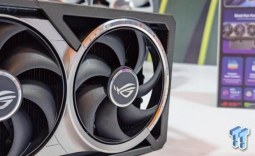 ASUS ROG Astral RTX 5090 reportedly causes discoloration on ASUS motherboard after six months
 Nothing has cancelled the CMF Phone 2 Pro's successor, blaming memory prices for making it unaffordable
 Intel Core 3 304 'Wildcat Lake' CPU appears on PassMark, matches the MacBook Neo
 Sony focuses heavily on AI in its recent summary, drops any mention of PC gaming
 Halo remake on PS5 requires two PS Plus subs for split-screen couch co-op
 Enthusiast attempts to install second 12V-2x6 connector on RTX 5090, is rewarded with a hole punched through the PCB
 Activision to release Black Ops 1 & 2 on PS4, PS5 to get past Sony's lack of PS3 backward compatibility
 UGREEN FineTrack Mini 2 Air Tracker Tag Review - Long battery life, lesser performance
 Speed Racer (2008) 4K Ultra HD Blu-ray Review: a stunning remaster of the cult classic
 MOAIPLAY ORA PRO G1 850W ATX 3.1 PSU Review: high efficiency and 10-year warranty for $119.99
 Navman MiVue Smart True 4K Surround Dashcam Review - Seeing In All Directions At Once
 IQUNIX Magi96 Pro Aluminum Low Profile Mechanical Keyboard Review - Premium Build, Satisfying Sound
 Asetek Forte S-Series Racing Simulator Bundle Review
 Razer Pro Type Ergo Wireless Split Ergonomic Keyboard Review - Built for Comfort and Support
 ASUS ROG Strix Morph 96 Wireless Gaming Keyboard Review - Great Performance, More Affordable
 SAPPHIRE Radeon RX 9070 GRE PULSE OC Review - A New 1440p Challenger Has Arrived
 NZXT H6 RGB+ Compact Dual-Chamber Chassis Review
 I stopped Windows 11 notifications from interrupting me with Do Not Disturb, Focus, and a priority list
 7 ways to transfer data from Android to Windows PC quickly and easily
 I read the Windows Backup app screen carefully, and it does not back up what most people think
 Low Sound Volume on Windows 11? How to fix audio issues and restore normal volume
 8 Critical Warning Signs You Should Never Ignore in Windows 11
 This Windows security feature protects Documents from ransomware, but it is off by default
 Windows 11 already has a voice typing tool, and it is the one most people are not using
 Quick Assist is the only remote-support tool I open when a relative calls about their PC
 The PowerToys utilities I keep enabled on every Windows 11 PC, and the ones I turned off within a week
 TweakTown's Best of Computex 2026 Awards - The Best Hardware, Gaming Gear, and AI