



Google rolled out its largest Search update in 25 years at its I/O developer conference last month, swapping traditional link-based results for AI-generated overviews, conversational follow-ups, and a default AI Mode. However, a significant number of users have pushed back against the AI-heavy direction and, in the process, many have ended up at DuckDuckGo.
Traffic to DuckDuckGo's No AI search page tripled after Google's announcement and has continued to surge. Daily visits have averaged about 84% above baseline, peaking on May 28 at a new traffic record. US app installs were up 18.1% week over week during the May 20 to May 25 period, with iOS installs peaking at 69.9% week-over-week growth. Third-party analytics firm Apptopia backed up the numbers, reporting a 29% increase in average daily US downloads over the same stretch.
"Google is force-feeding AI with no way to opt out. As a result, their results are getting worse, not better. We want to be the place that puts users in charge and allows them to decide how much or how little AI they want," said DuckDuckGo CEO Gabriel Weinberg. Chief communications officer Kamyl Bazbaz put it even more simply: "People just want a choice."

To keep the momentum going, the company has now launched new browser extensions for Chrome and Firefox that let users set its AI-free search page, noai.duckduckgo.com, as their default search engine. Once enabled, users are directed to a search experience with no AI-assisted answers, no chat prompts, and fewer AI-generated images.
For mobile users, switching off AI in the DuckDuckGo app takes about thirty seconds. Open the app, tap the menu, go to Settings, scroll to Other Settings, and tap AI Features. From there, the Duck.ai chatbot can be disabled entirely, and the app can be set to open with a plain search interface by default every time.
It is worth noting that DuckDuckGo is not positioning itself as an anti-AI company. It still runs its own AI chatbot, Duck.ai, which offers access to models including Claude, Llama, Mistral, and GPT-5 mini, all without storing search histories or using conversations for training. The key difference is that, unlike Google's approach, none of it is forced on the user.


 'AI should be a choice. Here's where you stand': 90% of DuckDuckGo users vote no to AI in poll
 Google keeps recommending ads that will steal your bank data
 Reddit CEO says Microsoft refuses to negotiate with Reddit to scrape its data
 Reddit officially blocks all major search engines besides one
 'Long con' browser extensions infect 2.3M Chrome and Edge users - here's what you need to know
 NVIDIA's RTX Spark is going directly after the MacBook Pro, with flagship N1x systems expected to start at $2,899
 AMD says it had to 're-engineer' the Ryzen 7 5800X3D from scratch to make the revival possible
 God of War Laufey will explore Odin's age-old question: What happens to gods when they die?
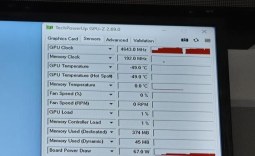 AMD overclocker pushes the Radeon RX 9060 XT to 4,643MHz with internal tools
 Intel's Nova Lake-S LGA1954 socket will reportedly support CPUs beyond 'Razor Lake', per new leak
 GIGABYTE unveils a pair of B850 motherboards with backside connectors, bringing cable-stealth to a lower price point
 Remedy's Control Resonant launches into a packed September lineup, PS5 gets exclusive 2-day early access
 Intel introduces Xeon 7 'Diamond Rapids' CPU lineup, built on the 18A-P process node
 New Onimusha Way of the Sword gets late-September release date, playable demo now live on PS5
 ASUS demos RTX 5090 with 16-pin connector running on a 48V system at Computex, GPU can push 1000W through a single cable
 Razer Pro Type Ergo Wireless Split Ergonomic Keyboard Review - Built for Comfort and Support
 ASUS ROG Strix Morph 96 Wireless Gaming Keyboard Review - Great Performance, More Affordable
 SAPPHIRE Radeon RX 9070 GRE PULSE OC Review - A New 1440p Challenger Has Arrived
 NZXT H6 RGB+ Compact Dual-Chamber Chassis Review
 ASRock Radeon RX 9070 GRE Steel Legend Review - The RDNA 4 Mid-Range Reshuffle
 ASRock Z890 Taichi Aqua Motherboard Review - Flagship features without the flagship price
 GIGABYTE Z890I AORUS Ultra Motherboard Review - Mini-ITX with surprisingly good thermals
 Seagate FireCuda X1070 4TB SSD Review - A New Mainstream Contender
 Lian Li HYDROSHIFT II 360P OLED Curved Liquid CPU Cooler Review
 ID-Cooling FROZN A620 SLK CPU Cooler Review
 Phison E37T SSD Controller Exclusive Preview - The Fastest DRAMless SSD Platform Yet
 USB Ports Not Working in Windows 11? Try These Fixes
 ASUS WiFi Routers and Networking Solutions Deliver Long-term Security and Reliability with No Additional Cost
 Second Monitor Not Detected in Windows 11? Try These Fixes
 Turn Your Old Smartphone Into a Dedicated Webcam for Your Windows PC
 The Send To menu is the right-click feature on Windows 11 that nobody bothers to customize
 Windows 11 will not let you pin a folder to the taskbar, but a 30-second workaround does
 ASUS ProArt Displays Unlock Creativity with Professional Monitors for Everyone
 What Happens If You Don't Activate Windows 11? 5 Downsides Explained
 Fast Internet on Your Phone but Slow on Your PC? Try These Fixes