



Looming over the next generation of consoles is the ongoing memory and storage crisis, driven by manufacturers diverting supply to high-paying AI companies amid a massive influx of capital into the space. Xbox won't be immune to its impacts, as executives are already discussing the real-world concerns of component prices and how they will affect the next Xbox console.

Xbox recently confirmed that hardware component costs are exploding, with Xbox CEO Asha Sharma detailing in a recent letter that, since this February, the price of storage components was 2x what Xbox had paid the previous fall. Adding, as of June this year, those prices have doubled again. The letter added that Xbox expects prices to continue rising to 5x what the company was paying just two years ago.
In a recent interview with The Game Business, Xbox Chief Strategy Officer, Matthew Ball, has touched on how the shortage will impact the next Xbox codenamed Project Helix.
"At the time [of the interview], there was a lot of, 'Ball is being histrionic,' on Twitter. However, six months later, I was underestimating how bad it is. Every single person in the industry is frustrated by that," he began, referencing a previous interview in which he said the RAM crisis "frightened" him.
"It is bad for players. It is bad for the platforms. Our obligation to our publishers is to grow that base so that they can help grow their business at a time in which everyone is struggling for growth," Ball continued. "The crisis is the right term. The crisis is not yet getting better. The window in which we and others are going to have to work through is getting longer, and that is going to constrain the category."
"We are working very hard to rethink everything that we can about Helix, and we are very cognizant of the ways in which we need to change as a company to make sure it is affordable, to make sure that it is flexible," Ball said
"We are working hard to rethink what that console model can look like, not in an exclusionary way, but in an additive way. [The RAM crisis] may have acute effects for two to two and a half years, beyond that it's hard to speculate, but the cascade and ripple will endure," he added


 Xbox confirms hardware costs are exploding, and that's bad news for the next Xbox and PS6
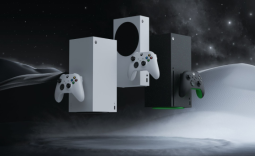 Xbox executive reveals if the time of new Xbox consoles is over
 Xbox 'Project Helix' launch could be delayed by the ongoing memory crisis
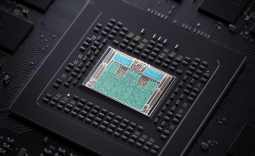 Xbox needs help launching next-gen Helix console
 Xbox hardware revenue drops to record low of Gen9 Xbox Series generation
 Xbox exec wants to use ads to open up new access points, not just to collect money
 Redditor buys RTX 2080 Ti Super engineering sample on eBay, has the same number of cores as an RTX Titan but half the VRAM
 Report: Xbox may be spun off into subsidiary or joint venture with another company
 Microsoft is reportedly cutting hundreds of Azure jobs in China for the third time in two years
 The Trump Mobile T1 teardown reveals it's basically an HTC phone wearing gold paint
 Game Pass is subsidizing parts of Xbox's business, subscriber loss caused major damage
 Framework delays first Laptop 13 Pro shipments by a month over touchpad and display issues
 GeForce NOW annual plans drop to $64.99 and $129.99 in NVIDIA summer sale
 Valve hit with a multi-hundred-million-dollar lawsuit over artificially inflating PC game prices
 MOAIPLAY ORA PRO G1 850W ATX 3.1 PSU Review: high efficiency and 10-year warranty for $119.99
 Navman MiVue Smart True 4K Surround Dashcam Review - Seeing In All Directions At Once
 IQUNIX Magi96 Pro Aluminum Low Profile Mechanical Keyboard Review - Premium Build, Satisfying Sound
 Asetek Forte S-Series Racing Simulator Bundle Review
 Razer Pro Type Ergo Wireless Split Ergonomic Keyboard Review - Built for Comfort and Support
 ASUS ROG Strix Morph 96 Wireless Gaming Keyboard Review - Great Performance, More Affordable
 SAPPHIRE Radeon RX 9070 GRE PULSE OC Review - A New 1440p Challenger Has Arrived
 NZXT H6 RGB+ Compact Dual-Chamber Chassis Review
 ASRock Radeon RX 9070 GRE Steel Legend Review - The RDNA 4 Mid-Range Reshuffle
 ASRock Z890 Taichi Aqua Motherboard Review - Flagship features without the flagship price
 Windows 11 already has a voice typing tool, and it is the one most people are not using
 Quick Assist is the only remote-support tool I open when a relative calls about their PC
 The PowerToys utilities I keep enabled on every Windows 11 PC, and the ones I turned off within a week
 TweakTown's Best of Computex 2026 Awards - The Best Hardware, Gaming Gear, and AI
 Phison E37T SSD Controller Exclusive Preview - The Fastest DRAMless SSD Platform Yet
 USB Ports Not Working in Windows 11? Try These Fixes
 ASUS WiFi Routers and Networking Solutions Deliver Long-term Security and Reliability with No Additional Cost
 Second Monitor Not Detected in Windows 11? Try These Fixes
 Turn Your Old Smartphone Into a Dedicated Webcam for Your Windows PC
 The Send To menu is the right-click feature on Windows 11 that nobody bothers to customize