



Google is reportedly in talks with Samsung Electronics to manufacture part of its next-generation AI processor. According to The Information, citing people familiar with the matter, the chip in question is Google's 10th-generation Tensor Processing Unit, codenamed "Icefish", with mass production potentially beginning as early as 2028.
The arrangement under discussion would split manufacturing between two foundries. TSMC would handle the main compute die on its 1.4nm process, while Samsung would produce the memory I/O die using its 2nm technology. Google is co-developing Icefish with MediaTek, and the chip is still under development.
The Information noted that Samsung's deep understanding of memory characteristics, including HBM, appears to have been a key factor in Google's consideration, and Samsung's ability to handle memory production, foundry work, and advanced packaging under one roof gives it a compelling integrated pitch.
- Read more: Samsung delays bleeding-edge 1.4nm node, puts its semiconductor eggs into its 2nm process
- Read more: Samsung to make 2nm Tesla AI6 chips at a loss, considers the order a 'blessing in disguise'
- Read more: Google orders Intel Foundry to produce over three million TPUs for 2028 amid TSMC capacity crunch

Samsung already supplies the HBM used in Google's existing TPUs, meaning that a broader role in Icefish could involve the company's memory division, foundry business, and packaging unit in a single project. Samsung's Taylor fab in Texas is reportedly being discussed as a potential production site.
AI demand has pushed TSMC's production to its limits, prompting major chip designers to look for alternatives. Earlier this week, a separate report revealed that Google is also in talks with Intel to manufacture more than three million TPUs in 2028, and NVIDIA has been evaluating Intel for future multi-die GPU designs.

Samsung's potential role in Icefish would sit alongside that arrangement rather than replace it, with Google effectively spreading its manufacturing footprint across three foundries for its next-generation AI chips. Samsung has also been building momentum on the foundry side. The company secured a $16.5 billion contract last year to manufacture Tesla's next-generation AI6 chip using its 2nm process, and is also producing components for NVIDIA's Vera Rubin platform.


 Samsung delays bleeding-edge 1.4nm node, puts its semiconductor eggs into its 2nm process
 Samsung forms 1nm development team, 'dream semiconductor process' aims mass production in 2029
 Samsung Foundry's bleeding-edge 1.4nm node pushed to 2029, a full two years later than planned
 Samsung in the AI era: next-gen 2nm node with backside power delivery mass production in 2027
 Samsung scratching its head 'intensively analyzing' why Google switched to TSMC chip production
 Ubisoft cuts another 100 jobs at San Francisco studio in latest round of layoffs
 Intel is prepping to launch 'Raptor Lake Next' CPUs and bring back DDR4 memory support
 Synology's FlashStation FS200T is an ultra-compact and quiet NAS for homes and small offices
 AMD claims its entry-level Ryzen AI laptops crush the MacBook Neo in gaming
 Google unveils a Microsoft Flight Simulator 2024 competitor... kind of?
 Radeon RX 9070 XT is now AMD's most popular PC gaming GPU
 Corsair GPU Power Bridge, designed to handle 100+ degrees, melts GeForce RTX 4090
 Gears of War: E-Day PC requirements detailed with GeForce RTX 2060 minimum and RTX 5060 recommended
 Insider pours cold water on rumors of Rockstar delaying GTA 6 release into 2027
 CD Projekt Red is reportedly working on an unannounced free-to-play Witcher co-op RPG for PC and mobile
 Speed Racer (2008) 4K Ultra HD Blu-ray Review: a stunning remaster of the cult classic
 MOAIPLAY ORA PRO G1 850W ATX 3.1 PSU Review: high efficiency and 10-year warranty for $119.99
 Navman MiVue Smart True 4K Surround Dashcam Review - Seeing In All Directions At Once
 IQUNIX Magi96 Pro Aluminum Low Profile Mechanical Keyboard Review - Premium Build, Satisfying Sound
 Asetek Forte S-Series Racing Simulator Bundle Review
 Razer Pro Type Ergo Wireless Split Ergonomic Keyboard Review - Built for Comfort and Support
 ASUS ROG Strix Morph 96 Wireless Gaming Keyboard Review - Great Performance, More Affordable
 SAPPHIRE Radeon RX 9070 GRE PULSE OC Review - A New 1440p Challenger Has Arrived
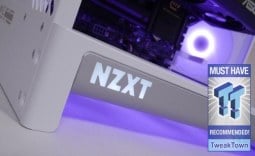 NZXT H6 RGB+ Compact Dual-Chamber Chassis Review
 ASRock Radeon RX 9070 GRE Steel Legend Review - The RDNA 4 Mid-Range Reshuffle
 This Windows security feature protects Documents from ransomware, but it is off by default
 Windows 11 already has a voice typing tool, and it is the one most people are not using
 Quick Assist is the only remote-support tool I open when a relative calls about their PC
 The PowerToys utilities I keep enabled on every Windows 11 PC, and the ones I turned off within a week
 TweakTown's Best of Computex 2026 Awards - The Best Hardware, Gaming Gear, and AI
 Phison E37T SSD Controller Exclusive Preview - The Fastest DRAMless SSD Platform Yet
 USB Ports Not Working in Windows 11? Try These Fixes
 ASUS WiFi Routers and Networking Solutions Deliver Long-term Security and Reliability with No Additional Cost
 Second Monitor Not Detected in Windows 11? Try These Fixes
 Turn Your Old Smartphone Into a Dedicated Webcam for Your Windows PC