



AMD has officially confirmed its next-generation Ryzen Threadripper family, codenamed "Mustang Peak." The upcoming lineup will move to a new TR6 platform, bringing Zen 6 cores built on TSMC's 2nm process and PCIe 6.0 support. The confirmation comes from AMD's own documentation, spotted by leaker IntaLatX64, which lists "TR6 Mustang Peak" as a Threadripper Pro CPU under the Family 1Ah Model A8h series.
AMD has not released specifics such as SKUs, core counts, clock speeds, cache sizes, TDPs, chipsets, or a release window. What the documentation does confirm is DDR5 memory support and PCIe Gen 6, the latter doubling per-lane bandwidth compared to the PCIe 5.0 lanes on the current TR5 platform.
The current Ryzen Threadripper 9000 series, codenamed Shimada Peak, is based on 3nm Zen 5 architecture and tops out at 96 cores and 192 threads with a 350W TDP and up to 128 PCIe 5.0 lanes. TR5 has served two generations now, covering both the Threadripper 7000 and 9000 families, making TR6 the first platform change since the 7000 series launched.
On the core configuration side, AMD's Zen 6 CCD design is expected to house up to 12 cores and 48MB of L3 cache per die. This is 50% more cores and cache per CCD than Zen 3, 4, and 5 dies. The TR6 platform is also expected to bring more memory channels and higher capacities, along with the new socket and expanded I/O, though specifics remain unconfirmed.

AMD expects to deliver its first Zen 6 products this year through EPYC Venice, which is already in volume ramp. EPYC and Threadripper have historically shared similar silicon foundations, with Zen 6 EPYC expected in 96-core and 256-core Zen 6C configurations. AMD typically skips the Zen C variants for Threadripper in favor of more performance-oriented standard cores, and the same is expected for Mustang Peak.
The documentation references Threadripper Pro in the description, while the page title uses the broader Ryzen Threadripper TR6 desktop processor name. So, it's unclear whether Mustang Peak will cover both HEDT and Pro workstation variants as TR5 did with its TRX50 and WRX90 motherboard split. But, with the official confirmation now in place, we can expect a proper announcement sometime next year, with the chips themselves likely landing in mid to late 2027.


 AMD Ryzen Threadripper 9000 'Shimada Peak' CPU spotted: 96-core, 16-core Zen 5 variants teased
 AMD launches new Ryzen Threadripper 9000 series CPU perf: 2x faster than Intel Xeon CPUs
 AMD Ryzen Threadripper 9000 series 'Shimada Peak' leaks: 96C/192T, 64C/128T, 32C/64T, 16C/32T
 Leaked AMD Zen 6 EPYC Venice samples spotted with 64-192 cores across 1P & 2P setups on Congo, Kenya, and Nigeria Platforms
 AMD's next-gen Zen 6 CPUs: TSMC 2nm 'N2P' CCD with TSMC 3nm 'N3P' IOD in 2026
 Anthropic's CEO confirms he can be fired as CEO through the company's own authority
 No Law looks like the next Cyberpunk 2077 in its stunning Unreal Engine tech demo
 SK Hynix and Samsung race to build the memory powering NVIDIA and AMD's next AI monsters
 GIGABYTE's 40th Anniversary GeForce RTX 5090 Infinity GPU priced at $5,300
 Epic Games pulls back the curtain on Unreal Engine 6, revealing exactly what everyone expected
 MSI's Maestro 500 Wireless blends gaming, lifestyle, and ANC, into a single headset
 NVIDIA launches ACE Game Agent SDK Beta for in-game AI companions that run on RTX GPUs
 PUBG's new Ally Duo game mode pairs you with an AI teammate powered by NVIDIA ACE
 Nintendo finally fixed the Switch eShop after nearly a decade by replacing its sluggish web wrapper with a native app
 AMD, Google, Tesla, and Groq turn to Samsung Foundry as TSMC runs out of capacity
 Speed Racer (2008) 4K Ultra HD Blu-ray Review: a stunning remaster of the cult classic
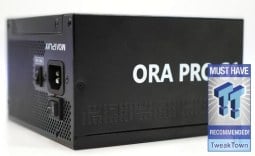 MOAIPLAY ORA PRO G1 850W ATX 3.1 PSU Review: high efficiency and 10-year warranty for $119.99
 Navman MiVue Smart True 4K Surround Dashcam Review - Seeing In All Directions At Once
 IQUNIX Magi96 Pro Aluminum Low Profile Mechanical Keyboard Review - Premium Build, Satisfying Sound
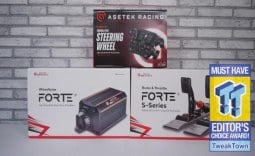 Asetek Forte S-Series Racing Simulator Bundle Review
 Razer Pro Type Ergo Wireless Split Ergonomic Keyboard Review - Built for Comfort and Support
 ASUS ROG Strix Morph 96 Wireless Gaming Keyboard Review - Great Performance, More Affordable
 SAPPHIRE Radeon RX 9070 GRE PULSE OC Review - A New 1440p Challenger Has Arrived
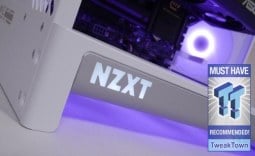 NZXT H6 RGB+ Compact Dual-Chamber Chassis Review
 ASRock Radeon RX 9070 GRE Steel Legend Review - The RDNA 4 Mid-Range Reshuffle
 I read the Windows Backup app screen carefully, and it does not back up what most people think
 Low Sound Volume on Windows 11? How to fix audio issues and restore normal volume
 8 Critical Warning Signs You Should Never Ignore in Windows 11
 This Windows security feature protects Documents from ransomware, but it is off by default
 Windows 11 already has a voice typing tool, and it is the one most people are not using
 Quick Assist is the only remote-support tool I open when a relative calls about their PC
 The PowerToys utilities I keep enabled on every Windows 11 PC, and the ones I turned off within a week
 TweakTown's Best of Computex 2026 Awards - The Best Hardware, Gaming Gear, and AI
 Phison E37T SSD Controller Exclusive Preview - The Fastest DRAMless SSD Platform Yet
 USB Ports Not Working in Windows 11? Try These Fixes