



Google is developing an upgraded variant of its next-generation Tensor Processing Unit, and MediaTek has secured the exclusive contract to build it. The chip is codenamed Triggerfish and sits within the TPU v9 family as an upgraded follow-on to the base Humufish design. Analyst Ming-Chi Kuo confirmed the arrangement on June 22, with production expected to begin in late 2027 and volume ramping through 2028.
Triggerfish builds on Humufish, though with some AI-targeted changes. SRAM capacity is two to three times higher than that of Humufish, allowing complex AI tasks to run on-chip rather than accessing slower memory. A new simulation die has been added, and the memory has been upgraded from HBM4 to HBM4E for higher bandwidth. This directly addresses the memory wall bottleneck that limits how fast AI accelerators can feed data to their compute units.
A dedicated CPU tile on the same package as the main compute die handles workload switching between training and inference. This makes Triggerfish the first Google TPU designed to handle both in a single chip rather than splitting them across separate silicon.
MediaTek previously handled I/O solutions and inference-optimized work on the TPU v7 and v8 generations, with Broadcom handling training-focused designs. Triggerfish marks the first time MediaTek has secured the exclusive order for a core Google TPU variant.

On shipments, Humufish is projected to reach 4 to 5 million units over its lifetime. Triggerfish adds an incremental 1-2 million units on top of that. The unit price premium for Triggerfish is around 30% higher than that of Humufish, making the smaller volume a more meaningful revenue contributor for MediaTek than the raw unit count suggests.
Humufish is also expected to use Intel's EMIB packaging rather than TSMC's CoWoS, with Intel handling packaging while TSMC manufactures the compute die. Reports of a three-million-unit Intel Foundry order for Google TPUs appear to refer to packaging rather than full wafer production. Google is now working across Broadcom, MediaTek, Marvell, and Intel for different parts of its AI chip supply chain.




 AMD, Google, Tesla, and Groq turn to Samsung Foundry as TSMC runs out of capacity
 Google is in talks with Samsung to build next-gen 'Icefish' TPU on 1.4nm and 2nm process split
 Google orders Intel Foundry to produce over three million TPUs for 2028 amid TSMC capacity crunch
 Samsung is reportedly preparing a 'Chromebook' variant of the Exynos 2800 to rival Apple's M7
 TSMC 3nm supply is tight: NVIDIA, Qualcomm, AMD consider raising AI chip prices
 Diablo 4 Season 14 changes how the best items in the game work
 AMD updates FSR SDK with FSR 4.1.1 support for RDNA 3 and improved FSR Ray Regeneration 1.2.0
 Valve offers update on Steam Deck 2, says it's close but still has one issue to solve
 Creative's new compact XF1 desktop PC speakers support Hi-Res audio
 8BitDo unveils new Nintendo 64-inspired Retro 87 Keyboard
 OLED buyer becomes victim of Amazon scam, receives broken 240Hz OLED screen instead of 540Hz OLED they initially ordered
 Samsung announces world's first UFS 5.0 chip with 10.8 GB/s read and 9.5 GB/s write speeds
 GTA 6 will feature a story chapter system like Red Dead Redemption 2
 AMD confirms Adrenalin 26.6.2 driver fails to launch on Windows 10, recommends rolling back
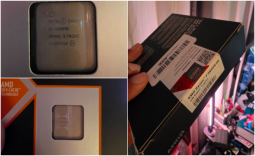 User receives Intel Core i9-10900K in sealed AMD Ryzen 7 9800X3D box from Amazon in CPU swap scam
 Dell XPS 14 (2026) Laptop Review - Premium Quality, Impressive Performance
 Ocypus Sigma F36 BK ARGB Cooling Fan Review: high airflow and unified design in one frame
 PCCooler CPS RZ820 Display Review: a flagship-level CPU air cooler with an LCD screen
 UGREEN FineTrack Mini 2 Air Tracker Tag Review - Long battery life, lesser performance
 Speed Racer (2008) 4K Ultra HD Blu-ray Review: a stunning remaster of the cult classic
 MOAIPLAY ORA PRO G1 850W ATX 3.1 PSU Review: high efficiency and 10-year warranty for $119.99
 Navman MiVue Smart True 4K Surround Dashcam Review - Seeing In All Directions At Once
 IQUNIX Magi96 Pro Aluminum Low Profile Mechanical Keyboard Review - Premium Build, Satisfying Sound
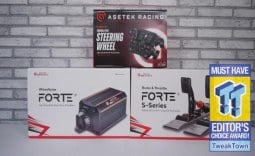 Asetek Forte S-Series Racing Simulator Bundle Review
 Razer Pro Type Ergo Wireless Split Ergonomic Keyboard Review - Built for Comfort and Support
 Level Up Your PC Gaming with these Fantastic ASUS Prime Day Deals on GPUs, Motherboards, and More
 GIGABYTE Wants to Kickstart Your New Gaming PC or Upgrade with These Limited-Time Deals
 7 Windows settings to change right after installation for better privacy, security, and performance
 I stopped Windows 11 notifications from interrupting me with Do Not Disturb, Focus, and a priority list
 7 ways to transfer data from Android to Windows PC quickly and easily
 I read the Windows Backup app screen carefully, and it does not back up what most people think
 Low Sound Volume on Windows 11? How to fix audio issues and restore normal volume
 8 Critical Warning Signs You Should Never Ignore in Windows 11
 This Windows security feature protects Documents from ransomware, but it is off by default
 Windows 11 already has a voice typing tool, and it is the one most people are not using