



It was only a matter of time. Apple has raised prices across its Mac and iPad lineups, effective immediately. The MacBook Neo now starts at $699, up from $599, while the MacBook Air jumped from $1,099 to $1,299. The MacBook Pro saw the largest increase among the laptops, rising by $300 to start at $1,999.
The Mac Studio also took a significant hit, with the M4 Max version now starting at $2,499, up from $1,999. The M3 Ultra version of the Mac Studio went up from $3,000 to $5,299, the largest single price hike in this round.
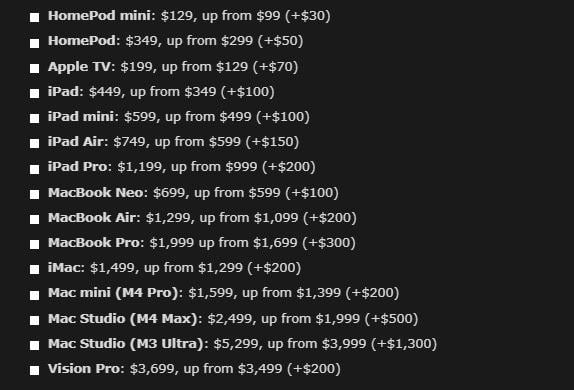
On the tablet side, the base iPad now starts at $449 (up from $349), the iPad Air jumped from $599 to $749, and the iPad Pro rose from $999 to $1,199. The iPhone, Apple Watch, AirPods, and accessories are the only product lines left untouched, for now. The average price increase across affected products sits at $246.67.
Apple was clear about why it was raising the prices. In a statement, the company pointed to steep component costs and said that, while it had shielded customers from them, the situation had become untenable. CEO Tim Cook had telegraphed this moment a week earlier in a Wall Street Journal interview, calling the situation "unsustainable" and saying he had never seen anything like it in over 40 years.

The root cause is the global memory crisis driven by AI demand. Apple had done well to hold prices steady until now, but the rising DRAM prices were eventually going to catch up to the tech giant. When the MacBook Neo launched at $599 in March, it was already clear the price point was precarious, and our earlier reporting flagged exactly this risk.

As for the iPhone, the reprieve is likely short-lived. Price increases for the iPhone are surely coming, but Apple is likely to wait for the iPhone 18 to implement them. Analyst estimates for iPhone 18 Pro pricing range from $50 to $270 higher than current models. The iPhone 18 Pro is expected to launch in September, coinciding with Tim Cook's planned handover of the CEO role to hardware chief John Ternus.

Several industry insiders have speculated that RAM prices won't normalize until 2028, and we've covered extensively how the memory crisis is projected to last well beyond that. Apple's price increase today is one of the clearest signals yet that the consumer tech industry has officially run out of runway to absorb these costs.




 Apple reportedly orders fresh A18 Pro silicon as MacBook Neo demand surges, $599 price point may be at risk
 Apple's MacBook Neo's 2027 model will reportedly include the A19 Pro chip and 50% more memory
 Apple's fleet of future-gen MacBooks leaked: new M5, M6-powered laptops, and A18 Pro MacBook
 Apple's new entry-level MacBook might only have 8GB, but it'll account for 25% of all Mac sales
 MacBook Neo sets new sales record for 'first-time' Mac buyers
 Razer Soma Chroma is a new RGB Gaming Chair that syncs up with over 300 games
 You can now play Half-Life 2 in your browser
 GTA 6 is apparently already banned in these countries
 Steam Summer Sale begins, here are some of the best deals for under $5 and $10
 Anthropic says Alibaba used 25,000 fake accounts to query Claude 28.8 million times and train Qwen off the results
 IBM announces world's first sub-1 nanometer chip with nanostack technology doubling transistor density
 The MacBook Ultra just lost its chip as Apple skips M6 Pro and M6 Max entirely
 DRAM prices surged by up to 89% in Q2 2026, destroying the consumer segment
 Most of Destiny team laid off, new Bungie leader steps down
 Adrenalinn hotfix driver 26.6.3 fixes Windows 10 bug preventing 26.6.2 driver from running on Windows 10
 UGREEN NASync DXP4800 GT Review: powerful 4-bay NAS with AMD Ryzen and dual 10GbE ports
 Dell XPS 14 (2026) Laptop Review - Premium Quality, Impressive Performance
 Ocypus Sigma F36 BK ARGB Cooling Fan Review: high airflow and unified design in one frame
 PCCooler CPS RZ820 Display Review: a flagship-level CPU air cooler with an LCD screen
 UGREEN FineTrack Mini 2 Air Tracker Tag Review - Long battery life, lesser performance
 Speed Racer (2008) 4K Ultra HD Blu-ray Review: a stunning remaster of the cult classic
 MOAIPLAY ORA PRO G1 850W ATX 3.1 PSU Review: high efficiency and 10-year warranty for $119.99
 Navman MiVue Smart True 4K Surround Dashcam Review - Seeing In All Directions At Once
 IQUNIX Magi96 Pro Aluminum Low Profile Mechanical Keyboard Review - Premium Build, Satisfying Sound
 Asetek Forte S-Series Racing Simulator Bundle Review
 6 underrated Microsoft Word features worth using to boost your productivity
 Level Up Your PC Gaming with these Fantastic ASUS Prime Day Deals on GPUs, Motherboards, and More
 GIGABYTE Wants to Kickstart Your New Gaming PC or Upgrade with These Limited-Time Deals
 7 Windows settings to change right after installation for better privacy, security, and performance
 I stopped Windows 11 notifications from interrupting me with Do Not Disturb, Focus, and a priority list
 7 ways to transfer data from Android to Windows PC quickly and easily
 I read the Windows Backup app screen carefully, and it does not back up what most people think
 Low Sound Volume on Windows 11? How to fix audio issues and restore normal volume
 8 Critical Warning Signs You Should Never Ignore in Windows 11
 This Windows security feature protects Documents from ransomware, but it is off by default