



NVIDIA's Vera CPU is built for the agentic AI era, and this week the company has lifted the lid on its internal performance data. And there's a lot to get through with performance data covering memory bandwidth and latency, application-specific performance, IPC performance for Vera's Olympus cores, as well as agentic AI performance. Most comparisons pit Vera against AMD's EPYC Turin 'Zen 5' x86 CPU, with Vera convincingly coming out on top.

As for the Arm-based Vera CPU's specs, here's a quick refresher of its impressive architecture. The monolithic die features 88 custom Olympus cores with 176 threads and 164MB of L3 Cache. This is paired with a whopping 1.5TB of SOCAMM LPDDR5X 9600 MT/s memory with 1.2TB/s of memory bandwidth. And when you add in low-latency comms between CPU clusters, shared cache, NVLink-C2C integration for 1.8 TB/s of CPU-to-GPU bandwidth, and high-bandwidth memory, it's an impressive engineering feat.
When it comes to the Vera CPU's performance, NVIDIA notes that the monolithic design and custom architecture are two reasons why it can achieve a level of performance not possible on current chiplet-based x86 chips. And when it comes to one of the most notable CPU benchmarks, IPC (Instructions Per Cycle), Vera offers up to a 1.9X improvement over AMD EPYC Turin when testing various AI workflows.

This lead increases to up to 2.3X when looking at Branch Prediction, another staple when it comes to CPU performance. And with fewer wasted cycles, Vera can achieve 3.5X higher Taken-branches per cycle compared to x86.

"Workloads such as agent runtimes, interpreters, compilers, graph analytics, and data-processing frameworks often combine large instruction footprints with frequent control-flow changes, which can leave execution resources underutilized," NVIDIA explains. "Olympus addresses these challenges with advanced branch prediction, high-bandwidth instruction fetch, and a 10-wide decode engine that delivers more instructions to the core each cycle. At the center of this approach is the Olympus branch prediction subsystem, which includes a neural branch predictor designed to improve accuracy on difficult, statistically biased branch patterns."
Overall, one of the key reasons Vera outperforms its EPYC Turin 'Zen 5' x86 rival comes down to latency, memory, and core-to-core bandwidth. NVIDIA notes that Vera delivers up to 3X the bandwidth, with 40% lower latency, so it doesn't hit the same bandwidth or memory wall as x86 solutions. So even though EPYC Turin has 128 cores, Vera's 88 cores have significantly more bandwidth to play with, which is extremely important for intensive agentic AI workloads.



Frequently Asked Questions
TweakBot answers common questions about this news using TweakTown's own coverage from this page and related content from our archive. All answers are generated from TweakTown content and not outside sources. Tap a question to reveal the answer, or type your own below related to this content.
How does Vera's IPC compare to AMD EPYC Turin across AI workloads and which workloads showed the largest IPC gains?
What Olympus core features (like branch prediction and decode width) contribute to Vera's higher instruction throughput?
How does Vera's memory bandwidth and latency compare to EPYC Turin and why does that matter for agentic AI workloads?
How do Vera's core count and memory bandwidth trade off against EPYC Turin's higher core count for AI data-processing tasks?
Have a question about this content not listed here? Ask below and TweakBot will answer it.

And when it comes to Agentic AI performance, which is what NVIDIA's Vera CPU was purpose-built for, Vera delivers 1.8X faster performance in Python with 1.5X faster Data Processing. NVIDIA says that Vera could become the leading CPU supplied in 2026, which begins to make sense, especially with companies like OpenAI, Anthropic, SpaceX, and Perplexity on board as early adopters.


 AMD says its next-gen EPYC 'Venice' processor is over 3X faster than NVIDIA Vera
 NVIDIA's Arm-based 'Vera' CPU benchmarked, beats Intel Xeon and AMD EPYC CPUs
 AMD announces 6th Gen AMD EPYC 'Venice' CPUs, up to 256 cores and 512 threads and built for AI
 NVIDIA hand-delivers the first Vera CPU systems to Anthropic, OpenAI, SpaceXAI, and more
 NVIDIA's 'Vera' CPUs could outperform and outsell competing x86 offerings from Intel and AMD
 Giveaway: 12 Winners Will Score MONTECH NX400 and NX600 CPU Coolers
 Dave Bautista officially cast as Kratos in Amazon's 'God of War' TV Series, replaces Ryan Hurst
 Take-Two begins the hunt for GTA 6 leaker CyberLeek, subpoenas Microsoft and Discord
 PlayStation 6 handheld not expected to stay under $600, warns leaker
 AMD confirms the Radeon RX 9050 4GB will have a tiny 64-bit bus and just 16MB Infinity Cache
 Intel 'Nova-Lake-S' 28-core CPU with bLLC reportedly draws 296W at PL2
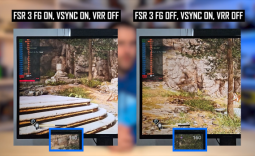 FSR 4 Frame Generation suffers from frame pacing issues causing the tech to be borderline unusable
 STALKER 2 receives massive performance boost with new 2.0 update, game gets upgraded to Unreal Engine 5.5.4
 Sandisk NAS 800 NVMe SSD delivers PCIe Gen5 speeds for demanding NAS environments
 RayNeo announces new iO Smart Glasses and GT Series with 'cinema-grade' display
 IQUNIX launches premium EC75 Hall Effect keyboard with 0.01mm Rapid Trigger
 Cooler Master MasterFan A120 Fan Review
 GIGABYTE MO27Q2A Gaming Monitor Review: 1440p, 280Hz, and QD-OLED is a winning combination
 Cooler Master V8 ACE 3DHP BLACK CPU Cooler Review
 ASUS ROG Strix XG129C Review: A $199 Gaming Monitor You Don't Play Games On
 Cooler Master HAF II 500 Mid-Tower Chassis Review
 Corsair HS35 v3 Wireless Gaming Headset Review - An Affordable Winner
 D-Link F518 5G Wi‑Fi 6 AX1800 Mobile Hotspot Review: All-Day Mobile Hotspot
 Bose Lifestyle Ultra Speaker Review - Impressively Detailed Room-Filling Sound
 MSI Z890 Gaming Plus WIFI6E Review - Z890 for under $200
 Mortal Kombat (1995) 4K Ultra HD Blu-ray Review
 Using Multiple Monitors? Change these Windows settings for a Better Experience
 Windows Sandbox is The Windows Security Feature Most People Never Use
 I ditched the Windows 11 context menu for this open-source tool, and here's why
 Windows 11 may be encrypting your drive already, and I checked where my recovery key went
 GIGABYTE's 40 Days of INFINITY celebrates 40 Years of Innovation with stunning GeForce RTX graphics cards and rewards
 I swapped File Explorer for this free file manager and finally got the layout I wanted
 How to tell if someone has been using your Windows PC without your permission
 6 Task Manager tips for troubleshooting Windows performance problems
 ASUS ROG's 20th Anniversary Line-up of Premium PC Gaming Gear has Arrived - Here's Everything You Need to Know
 Six File Explorer tips every Windows user should know