



Intel's 'Wildcat Lake' Core 300 series of processors is built for the entry-level PC segment, balancing CPU, GPU, and NPU power in low-power systems. Powered by the company's cutting-edge 18A process node, similar to what's found in Panther Lake, the big thing here is the introduction of the RibbonFET architecture, which dramatically improves efficiency compared to more traditional FinFET designs.

Recently, we've begun to see benchmarks for unreleased products pop up online, which has led to some significant buzz surrounding the lineup. For example, a PassMark benchmark result for the entry-level Core 3 305 from the Wildcat Lake series, which features 6 CPU cores and a single Xe3 graphics core, delivered multi-threaded performance that beats the Apple A18 Pro found in the MacBook Neo.
It even managed to edge out the Core 5 315, which is encouraging. Today, while exploring the various tech-based sights and sounds at Computex 2026, we noticed an Intel engineering board for a Wildcat Lake system with an Intel Core Processor 360, Xe3 graphics, 16GB of LPDDR5 memory, and Phison's aiDAPTIV AI20EH storage built for local AI. The SSD sports 768GB of storage with an impressive 85GB of cache. Basically, this is a low-power, efficient look at a laptop that could be a game-changer for efficient local AI workloads.

This looks like the top Wildcat Lake processor, and it was definitely cool to see it in pre-release engineering form. Kind of like a mini-Panther Lake with impressive potential, especially when paired with one of Phison's aiDAPTIV SSDs that are built for AI workloads. Although we couldn't see the chip itself, it's underneath the custom heatsink with the two locked prongs; today's Computex 2026 journey felt like it contained a little detour into Intel's lab.









 Intel Core 300 'Wildcat Lake' specifications surface, six SKUs up to 35W TDP
 Intel 'Wildcat Lake' benchmarks spotted, the Core 5 320 is 21% faster than the MacBook Neo's A18 Pro
 Intel Core 7 350 'Wildcat Lake' CPU spotted on PassMark, exchanges blows with the Apple A19 Pro
 OEM Advantech confirms Intel 'Wildcat Lake' specs
 Intel Wildcat Lake laptops launch May 18 in China with Honor's MagicBook X14 listed at $650
 God of War Laufey will explore Odin's age-old question: What happens to gods when they die?
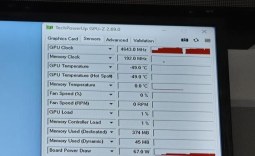 AMD overclocker pushes the Radeon RX 9060 XT to 4,643MHz with internal tools
 Intel's Nova Lake-S LGA1954 socket will reportedly support CPUs beyond 'Razor Lake', per new leak
 GIGABYTE unveils a pair of B850 motherboards with backside connectors, bringing cable-stealth to a lower price point
 Remedy's Control Resonant launches into a packed September lineup, PS5 gets exclusive 2-day early access
 Intel introduces Xeon 7 'Diamond Rapids' CPU lineup, built on the 18A-P process node
 New Onimusha Way of the Sword gets late-September release date, playable demo now live on PS5
 ASUS demos RTX 5090 with 16-pin connector running on a 48V system at Computex, GPU can push 1000W through a single cable
 Ocypus unveils new AIO cooling solutions at Computex 2026 that can physically move
 ASRock showcases next-gen GPU design at Computex 2026, and it could be for RDNA 5
 Razer Pro Type Ergo Wireless Split Ergonomic Keyboard Review - Built for Comfort and Support
 ASUS ROG Strix Morph 96 Wireless Gaming Keyboard Review - Great Performance, More Affordable
 SAPPHIRE Radeon RX 9070 GRE PULSE OC Review - A New 1440p Challenger Has Arrived
 NZXT H6 RGB+ Compact Dual-Chamber Chassis Review
 ASRock Radeon RX 9070 GRE Steel Legend Review - The RDNA 4 Mid-Range Reshuffle
 ASRock Z890 Taichi Aqua Motherboard Review - Flagship features without the flagship price
 GIGABYTE Z890I AORUS Ultra Motherboard Review - Mini-ITX with surprisingly good thermals
 Seagate FireCuda X1070 4TB SSD Review - A New Mainstream Contender
 Lian Li HYDROSHIFT II 360P OLED Curved Liquid CPU Cooler Review
 ID-Cooling FROZN A620 SLK CPU Cooler Review
 Phison E37T SSD Controller Exclusive Preview - The Fastest DRAMless SSD Platform Yet
 USB Ports Not Working in Windows 11? Try These Fixes
 ASUS WiFi Routers and Networking Solutions Deliver Long-term Security and Reliability with No Additional Cost
 Second Monitor Not Detected in Windows 11? Try These Fixes
 Turn Your Old Smartphone Into a Dedicated Webcam for Your Windows PC
 The Send To menu is the right-click feature on Windows 11 that nobody bothers to customize
 Windows 11 will not let you pin a folder to the taskbar, but a 30-second workaround does
 ASUS ProArt Displays Unlock Creativity with Professional Monitors for Everyone
 What Happens If You Don't Activate Windows 11? 5 Downsides Explained
 Fast Internet on Your Phone but Slow on Your PC? Try These Fixes