



Intel has officially launched its Xeon 6+ "Clearwater Forest" processor family at Computex 2026, and it's a landmark moment for the company. These are Intel's first data center CPUs with compute tiles built on the Intel 18A process node, putting the current-gen node firmly in production and shipping through enterprise server vendors on day one.
The lineup spans four SKUs across six configurations, starting at 144 cores with the Xeon 6960E+ and topping out at 288 cores on the flagship Xeon 6990E+. All models support single- and dual-socket configurations, with dual-socket setups pushing the total core count to 576. Every SKU comes with support for 12-channel DDR5-8000 memory, 96 PCIe Gen 5 lanes, 64 CXL 2.0 lanes, six UPI 2.0 links, and Intel's new Application Energy Telemetry (AET). TDPs range from 300W to 450W across the lineup.

Architecturally, Clearwater Forest is one of Intel's most complex chiplet designs to date. Each package stacks 12 compute tiles on Intel 18A, each carrying 24 Darkmont E-cores, for a total of 288 cores per socket. These sit atop three active base tiles on Intel 3 and two I/O tiles on Intel 7, all connected using Foveros Direct 3D and EMIB packaging. The result is 576 MB of L3 cache alongside 288 MB of L2 cache.

Intel is targeting cloud-native, telecom, and agentic AI workloads with this part, and the core count makes a compelling argument on paper. For its first-party competitive data, Intel compares the Xeon 6990E+ directly against AMD's 192-core EPYC 9965, claiming 30% better average performance per thread and up to 30% superior power efficiency. Intel also claims up to 2.5x performance over its prior-generation Sierra Forest chips and up to 9:1 server consolidation versus 2nd Gen Xeon platforms.

On the security side, Intel SGX and Intel TDX are baked into silicon, covering confidential and multi-tenant workloads. Platform compatibility carries over from existing Xeon 69xxE/P infrastructure, which should ease adoption for OEM partners. Intel has also confirmed that its oneAPI 2026.0 toolkit ships with full Clearwater Forest support out of the box, making software migration easier for existing Xeon customers. Clearwater Forest systems are available today through ASUS, Dell, Ericsson, GIGABYTE, HPE, Lenovo, and Supermicro.

With AMD's EPYC Venice on Zen 6 targeting a second-half 2026 release and NVIDIA's Vera CPU already benchmarking ahead of both x86 incumbents in some tests, Intel needed a strong showing. It looks like Clearwater Forest, at least on paper, is exactly that.







 Intel's next-gen Clearwater Forest Xeon CPU unveiled: 288 cores, made in the USA on 18A node
 Intel introduces Xeon 7 'Diamond Rapids' CPU lineup, built on the 18A-P process node
 Intel's next-gen Xeon 'Clearwater Forest' CPU package spotted: the first Intel 18A chip
 Intel's new 'Johnson City' platform supports next-gen Xeon 'Diamond Rapids' CPUs with 650W TDP
 Intel Xeon 654 'Granite Rapids' CPU details leaked: 18C/36T at 4.8GHz, 72MB cache, and more
 Remedy's Control Resonant launches into a packed September lineup, PS5 gets exclusive 2-day early access
 New Onimusha Way of the Sword gets late-September release date, playable demo now live on PS5
 ASUS demos RTX 5090 with 16-pin connector running on a 48V system at Computex, GPU can push 1000W through a single cable
 Ocypus unveils new AIO cooling solutions at Computex 2026 that can physically move
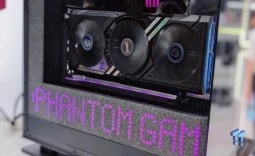 ASRock showcases next-gen GPU design at Computex 2026, and it could be for RDNA 5
 Levelplay's Newtro liquid cooler adds a turnable fan speed knob to your PC
 be quiet! teases next-gen Pure Base 803 and Pure Base 803 LX cases
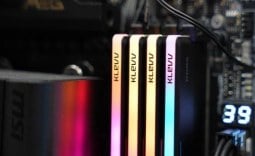 KLEVV's 256GB DDR5 kit maxes out Arrow Lake memory capacity with just two DIMMs
 Corsair unveils compact CLIPPER PRO MINI 60 magnetic keyboard with innovative features
 Razer Pro Type Ergo Wireless Split Ergonomic Keyboard Review - Built for Comfort and Support
 ASUS ROG Strix Morph 96 Wireless Gaming Keyboard Review - Great Performance, More Affordable
 SAPPHIRE Radeon RX 9070 GRE PULSE OC Review - A New 1440p Challenger Has Arrived
 NZXT H6 RGB+ Compact Dual-Chamber Chassis Review
 ASRock Radeon RX 9070 GRE Steel Legend Review - The RDNA 4 Mid-Range Reshuffle
 ASRock Z890 Taichi Aqua Motherboard Review - Flagship features without the flagship price
 GIGABYTE Z890I AORUS Ultra Motherboard Review - Mini-ITX with surprisingly good thermals
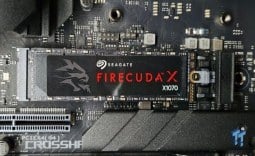 Seagate FireCuda X1070 4TB SSD Review - A New Mainstream Contender
 Lian Li HYDROSHIFT II 360P OLED Curved Liquid CPU Cooler Review
 ID-Cooling FROZN A620 SLK CPU Cooler Review
 Phison E37T SSD Controller Exclusive Preview - The Fastest DRAMless SSD Platform Yet
 USB Ports Not Working in Windows 11? Try These Fixes
 ASUS WiFi Routers and Networking Solutions Deliver Long-term Security and Reliability with No Additional Cost
 Second Monitor Not Detected in Windows 11? Try These Fixes
 Turn Your Old Smartphone Into a Dedicated Webcam for Your Windows PC
 The Send To menu is the right-click feature on Windows 11 that nobody bothers to customize
 Windows 11 will not let you pin a folder to the taskbar, but a 30-second workaround does
 ASUS ProArt Displays Unlock Creativity with Professional Monitors for Everyone
 What Happens If You Don't Activate Windows 11? 5 Downsides Explained
 Fast Internet on Your Phone but Slow on Your PC? Try These Fixes